How Does a Biogas Plant Work?
Biogas is a type of gas produced when organic waste is broken down by microorganisms in an oxygen-free environment. This process usually takes place inside an anaerobic digester, which is only one part of a complete biogas plant
In real projects, people often use terms like “biogas plant,” “digester,” “fermentation tank,” and “biogas storage tank” interchangeably. However, these are not exactly the same thing. Simply speaking, a biogas plant refers to the entire biogas production system, while the digester is one of its core components.
Besides the digester, a complete biogas project usually includes many supporting systems. Smaller projects may only have one digester, while large-scale plants often operate with multiple integrated systems.
Common supporting systems include:
- Feedstock reception area
- Manure storage system
- Post-digester
- Gas holder
- Biogas upgrading system
- Combined Heat and Power (CHP) system, etc.
Below is a brief explanation of what these parts do.

Reception Area
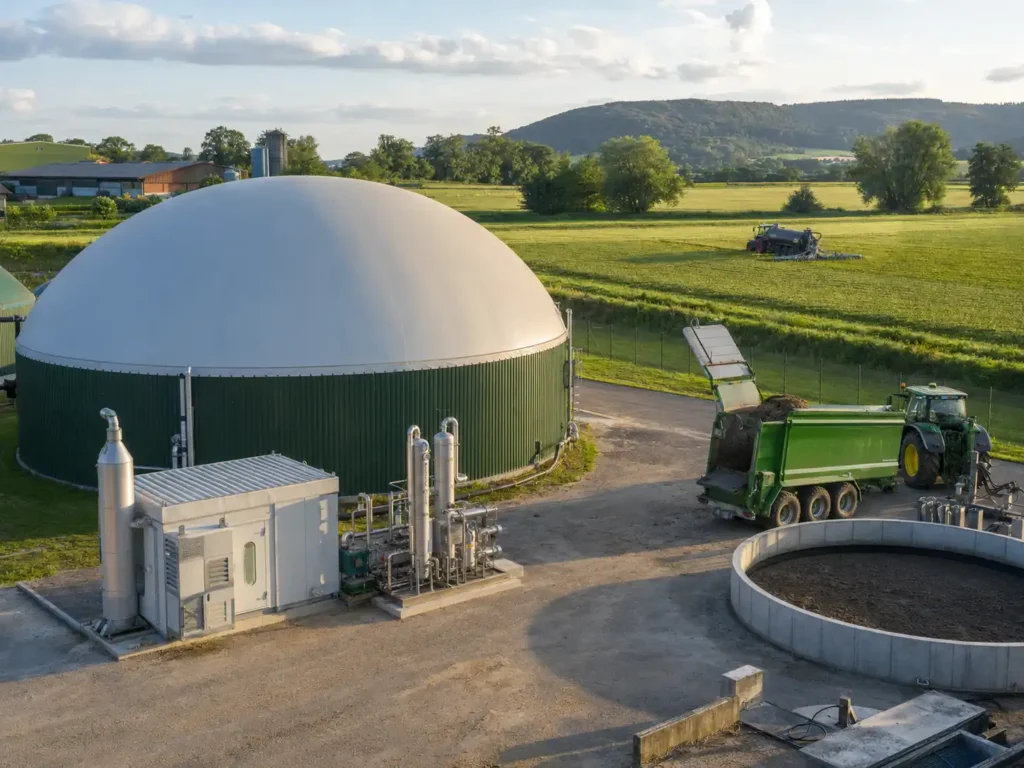
This area is mainly used for receiving and temporarily storing feedstocks, such as food waste, plant residues, and green waste.
Some materials cannot be fed directly into the digester and require simple pretreatment first, such as dilution adjustment, mixing, crushing, or impurity removal. These processes are usually carried out in the reception area.
Storage Tank
The storage tank is mainly used for storing livestock manure and acts like a raw material warehouse.
When feeding is needed, the manure is pumped into the digester. After entering the fermentation system, the mixed material is usually called “slurry,” which then undergoes anaerobic digestion to produce biogas.
Digester
The digester is the core component of the entire biogas system.
Inside the digester, organic materials are kept in an oxygen-free environment while being heated and mixed continuously. This creates suitable living and fermentation conditions for microorganisms. As the microorganisms break down the organic matter, biogas is continuously produced.
These systems usually operate continuously, which means:
- Feedstock is constantly added into the system
- Fermented residue is continuously discharged from the system
To maximize biogas production, some projects also install a post-digester. This allows the remaining gas in the slurry to continue being released, improving the overall gas yield.
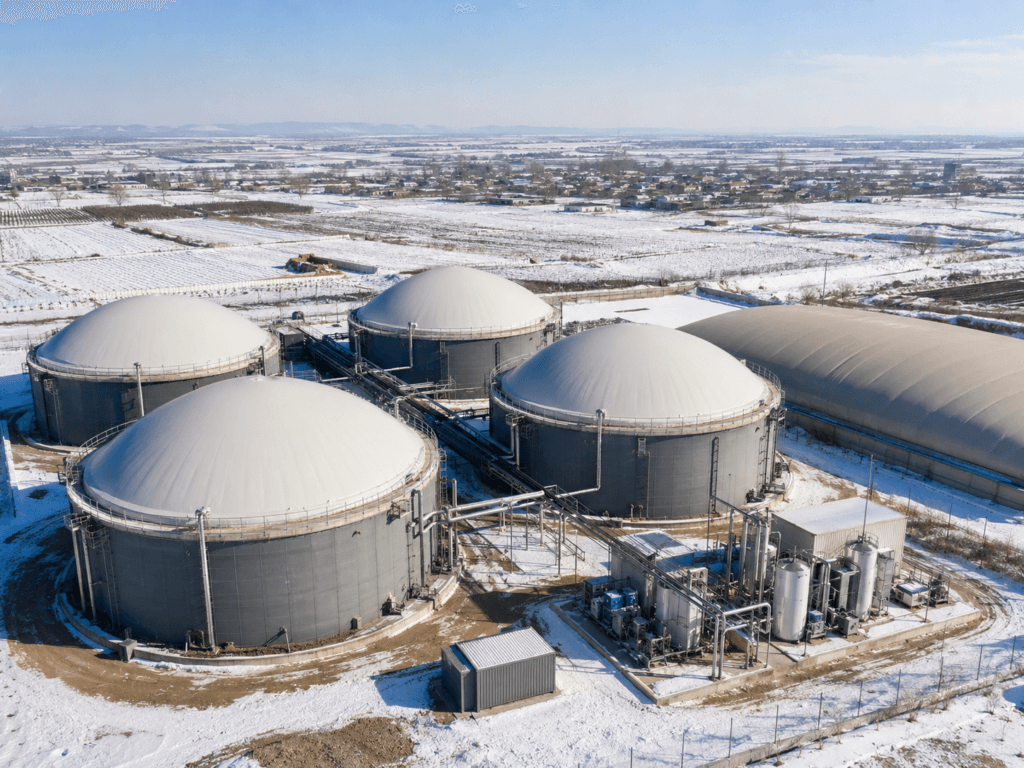
In large-scale biogas projects, multiple digesters and post-digesters are often installed together to meet higher processing capacities and different process requirements.
Gas Holder and Gas Upgrading Unit
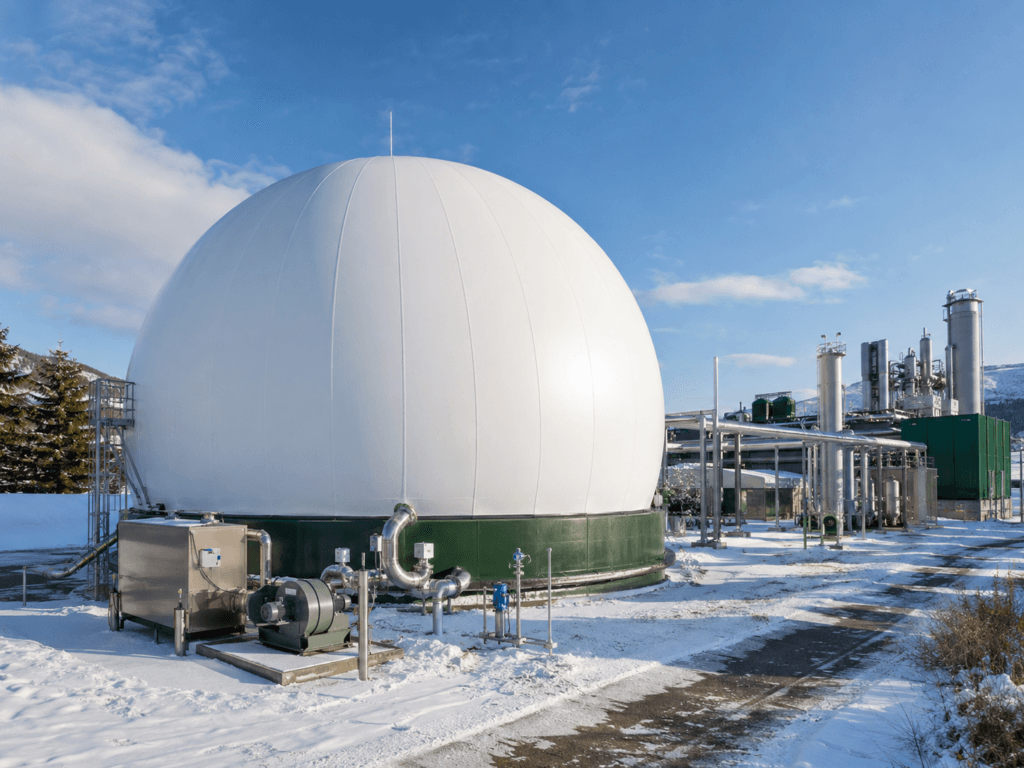
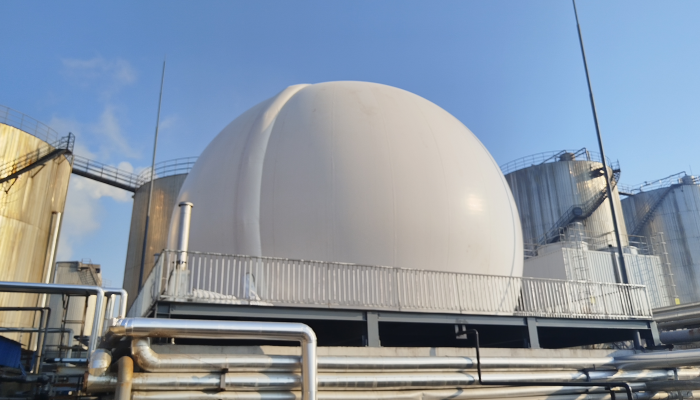
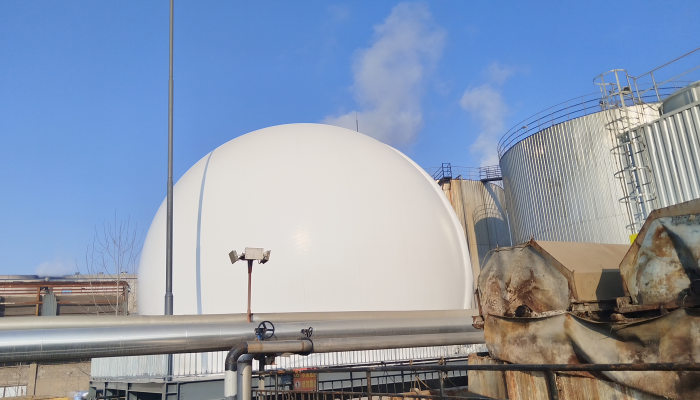
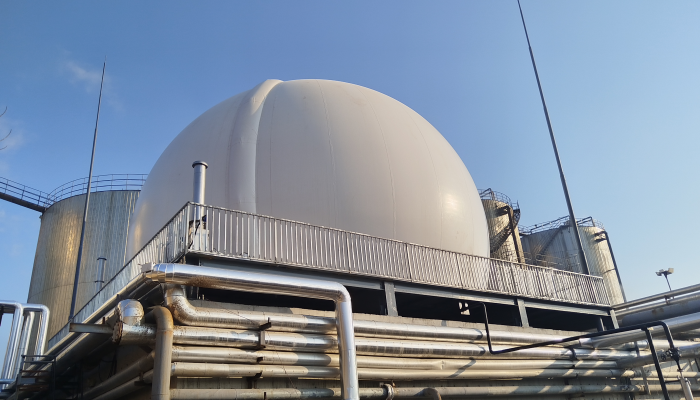
The gas holder is mainly used to collect and store the biogas produced by the digester, making it a very important part of the entire biogas project.
The stored biogas can then enter a gas upgrading system for purification. In some projects, gas storage and upgrading are integrated into one system.
During the upgrading process, impurities such as hydrogen sulfide (H₂S) and carbon dioxide (CO₂) are removed to increase the methane content of the biogas, making the gas cleaner and more valuable for utilization.
Purified biogas can be used for many purposes, including:
- Injection into the natural gas grid
- Electricity generation
- Heat supply
- Compression into CNG fuel
- Liquefaction into LNG fuel, etc.
Combined Heat and Power (CHP) System
A Combined Heat and Power (CHP) system simply means using biogas to generate electricity .
After biogas enters the generator set, it is converted into electrical energy, which can be used to operate equipment within the plant or supplied to external users.
In addition to generating electricity, the heat produced during generator operation is also recovered instead of being wasted. This recovered heat can be used for:
- Winter heating
- Hot water supply
- Digester heating
- Absorption cooling, etc.
By utilizing both electricity and heat, the overall energy efficiency of the system is significantly improved.
Conclusion
A complete biogas plant is actually made up of many different systems working together.
However, the exact equipment configuration depends on the project scale, feedstock type, and process requirements.
No matter how the system is designed, the anaerobic digester always remains the core component of the entire biogas project.
RELATED BLOG