What is the difference between natural gas and biogas?
Many people think that “natural gas” and “biogas” are basically the same thing, just with different names.
But in reality, they are very different in terms of where they come from, how environmentally friendly they are, and whether they can be used sustainably in the long term.
Although the word “natural” is part of the name, natural gas is still a fossil fuel, similar to coal and oil. It is extracted from underground resources, and once it is used, the supply keeps decreasing. In other words, it is a non-renewable resource.
Biogas is completely different.
It is a green and renewable energy source. Besides being used for power generation and boilers, it can also help treat waste and reduce pollution, which is why many countries are actively promoting it.
Simply put:
- Natural gas is “energy extracted from underground,”
- while biogas is “energy made from waste.”
So, what exactly is biogas?
Biogas is a combustible gas produced when organic waste materials are fermented.


For example:
- Food waste
- Pig manure, cow manure, and chicken manure
- Agricultural waste
- Sludge
All of these materials can be used to produce biogas.
The working principle is actually quite simple.
You can think of it like this:
These organic wastes are placed into a large sealed tank with no oxygen inside. Then microorganisms slowly “eat” and break down the waste materials.
During this process, a combustible gas is continuously produced — and that gas is biogas.
This process has a professional name:
- Anaerobic fermentation
- Or anaerobic digestion
Put simply:
- “It’s a process where bacteria turn waste into gas in an oxygen-free environment.”
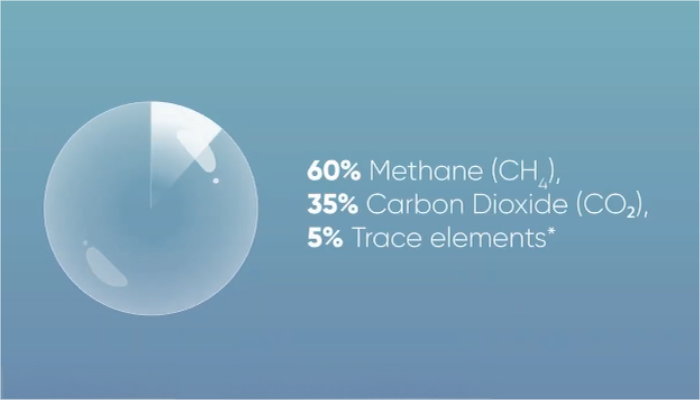
Biogas mainly consists of:
- Methane (CH₄): about 60%–65%
- Carbon dioxide (CO₂): about 30%–35%
- Nitrogen (N₂): about 0%–5%
- Hydrogen sulfide (H₂S): about 0%–2%
When these gases are mixed together, they form raw biogas.
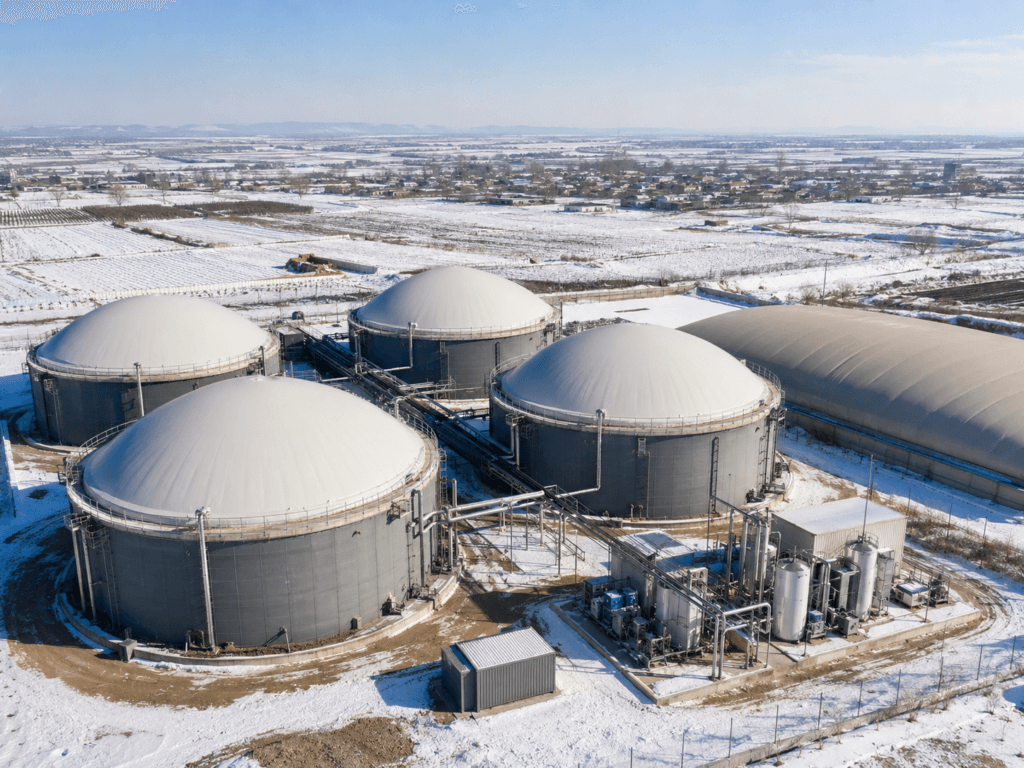
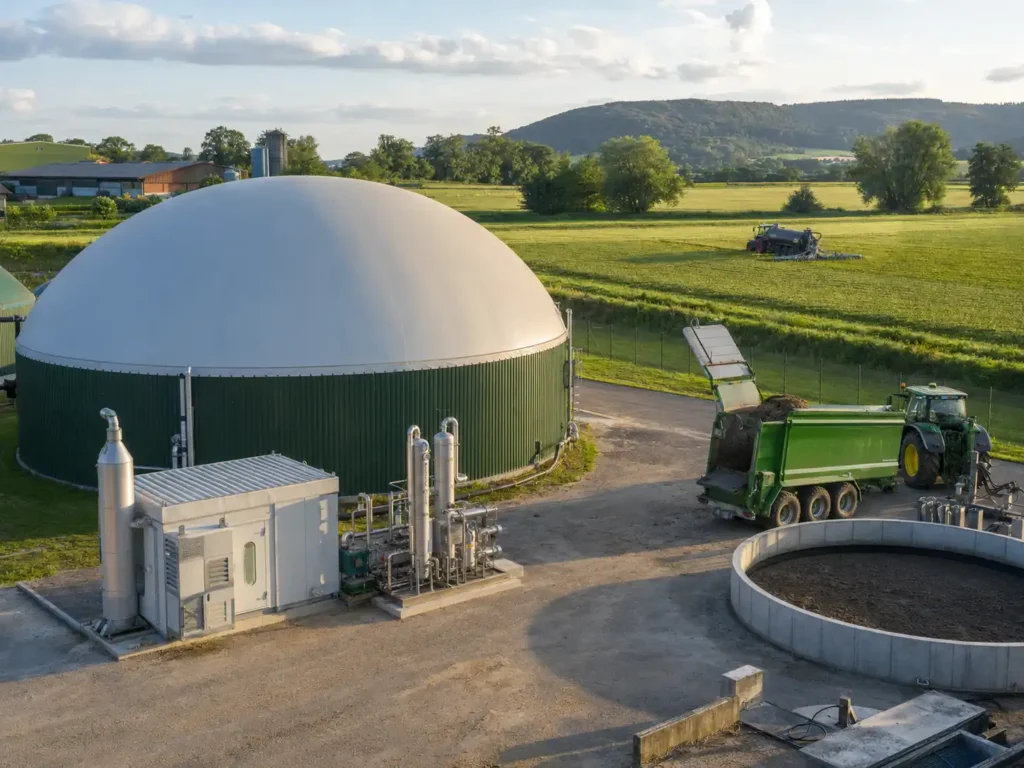
The entire fermentation process is usually carried out inside large anaerobic digesters.
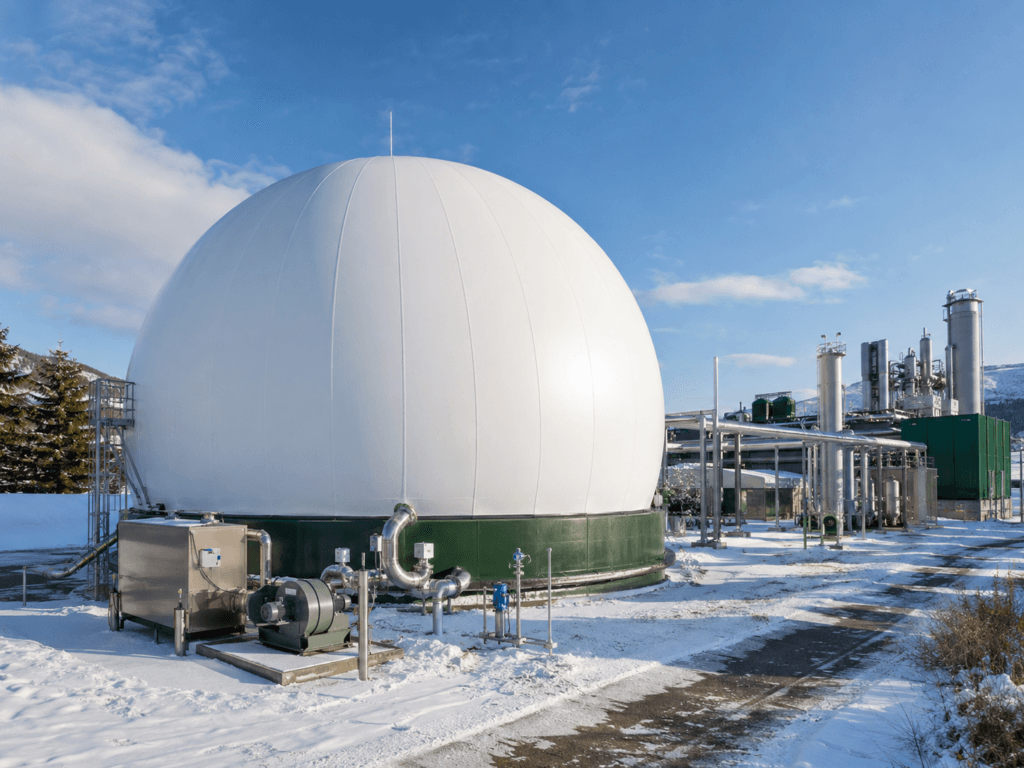
After the gas is produced, special gas storage equipment is also needed to store it safely, such as double membrane gas holders. These systems help ensure safer and more stable biogas storage and usage.
The biggest advantage of biogas can actually be summed up in one sentence:
“Turning waste into energy.”
Waste materials that were once useless — and could even pollute the environment — can now be treated and reused for:
- Power generation
- Heating
- Cooking
- Vehicle fuel
This is a true example of “turning waste into value.”
So, what is natural gas?
Natural gas is different from biogas. It belongs to the category of traditional fossil fuels, just like coal and oil.
It was formed millions of years ago from the remains of ancient plants, animals, and microorganisms that were buried underground and gradually transformed under high temperature and pressure.
Because of this, natural gas is usually stored deep inside underground rock formations and must be extracted using drilling equipment.

In everyday life, people have been using natural gas for many years, for example:
- Home heating
- Hot water supply
- Cooking
- Industrial fuel use
Natural gas is certainly convenient to use, but its biggest problem is obvious:
The more we use it, the less there is.
This is because natural gas is a non-renewable resource. Unlike biogas, it cannot be continuously produced. Once underground reserves are depleted, they cannot be replenished within a short period of time.
That is why many countries are now trying to develop new energy sources, and renewable energy like biogas is receiving more and more attention.
So why isn’t natural gas considered truly environmentally friendly?
Because when natural gas burns, it releases a large amount of carbon dioxide.
And carbon dioxide is one of the main causes of the greenhouse effect and global warming.
Although natural gas is cleaner than coal and produces less pollution, it is still a fossil fuel at its core. It still creates carbon emissions, so it cannot really be considered a fully green energy source.
Biogas, however, is different.
Biogas comes from:
- Food waste
- Manure
- Agricultural waste
Simply put:
These materials would naturally release gas as they decompose anyway.
The difference is that biogas systems collect and reuse these gases instead of letting them go directly into the atmosphere.
So unlike fossil fuels, biogas does not add large amounts of “carbon that has been trapped underground for millions of years” back into the atmosphere.
That is why many people describe biogas as:
“A carbon-neutral energy source.”
To briefly summarize the biggest differences between the two:
Biogas:
- Can be continuously produced
- More environmentally friendly
- Has a wide range of raw material sources
- Helps treat waste at the same time
- Can reduce carbon emissions
- Relatively lower operating costs
- Better suited for sustainable development in the future
Natural Gas:
- A fossil fuel
- The more it is used, the less remains
- Underground reserves are limited
- Produces large amounts of greenhouse gases
- Expensive to extract
- Long-term dependence is not sustainable

To put it even more simply:
- Natural gas is “consuming the Earth’s reserves,”
- while biogas is “recycling waste into energy.”
From an economic perspective:
- Although biogas systems require upfront investment — such as building anaerobic digesters and double membrane gas holders — their long-term operation is often less complicated than many people imagine.
Especially in areas with:
- Large livestock farms
- Abundant agricultural waste
- Concentrated food waste sources
Biogas projects have a major advantage in these areas because the raw materials are usually abundant and continuously available.
Natural gas is different.
Natural gas requires:
- Underground extraction
- Long-distance transportation
- Pipeline network construction
- Continuous supply infrastructure
All of this makes the overall cost relatively high, while also increasing dependence on limited underground resources.
So in the long run, many people believe that:
Biogas can be more economical and better aligned with the future direction of green and low-carbon development.
To sum it up:
Although both natural gas and biogas can be used as fuel and energy sources, they are fundamentally very different.
Natural gas represents traditional fossil energy,
while biogas represents a more future-oriented green energy solution.
Simply put:
Natural gas is “continuously consuming resources,”
while biogas is “continuously recycling waste into energy.”
As the world places more emphasis on environmental protection, carbon reduction, and sustainable development, biogas — which can both treat waste and produce energy — is being adopted by more and more industries.
RELATED BLOG