• High quality
  • Worldwide
  • Own assembly teams

21211212

Category: News

  • Why Choose Qingdao Haiyue?

    Why Choose Qingdao Haiyue?

    4. Nearly 20 Years of Industry Experience, Serving 3,000 Global Clients

    With nearly 20 years of deep expertise in the biogas membrane structure sector, we have completed over 3,000 installation projects worldwide, backed by a team of experienced engineers and technical specialists. We are committed to building safe, durable, and stable gas storage systems. Through industry evolution and technological advancements, our original mission and commitment to quality remain unwavering. We empower global biogas projects with professional, practical solutions, leveraging our long-term experience to create reliable value for our clients.

    5. Commitment to Green, Eco-Friendly, and Sustainable Principles

    Qingdao Haiyue consistently integrates green and sustainable principles throughout the entire product lifecycle—from the eco-friendly selection of specialized biogas membrane materials and the optimization of low-carbon production processes to the energy-efficient design upgrades of energy storage systems. We comprehensively support resource recycling and the realization of the global carbon neutrality vision, creating biogas storage solutions that combine environmental friendliness, long-term effectiveness, and sustainability.

  • Why Choose Qingdao Haiyue ?

    Why Choose Qingdao Haiyue ?

    3. Professional CAD Detailed Drawing Services

    Our technical team provides complete detailed construction drawings for every gas storage project. All drawings are precisely drawn to scale, facilitating review and construction by designers, contractors, and supervisors. The drawings cover all details, including structural dimensions, material selection, welding joints, foundation embedments, and component configurations—professional, clear, and ready for direct implementation.

    4.Dedicated Project Management System

    Each project is assigned a dedicated technical lead and project manager who maintain constant alignment on design, schedule, and technical requirements throughout the process, ensuring accuracy in materials, processes, and construction plans. The project team guarantees high-quality, on-schedule progress through site surveys, detailed design, customized production planning, and on-site supervision. Additionally, they are available for real-time communication with all project stakeholders to provide professional technical support.

    5. Direct Communication with Core Management

    Throughout the project, you can communicate directly with the company’s core management team. This ensures efficient decision-making and rapid response, guaranteeing timely, precise, and controllable production, delivery, and installation.

  • What Are the Benefits of Biogas?

    What Are the Benefits of Biogas?

    2. Helpful for Agriculture

    For farms and livestock operations, a biogas system is not just a gas production unit — it is also a waste treatmentbiogas plant and resource recycling system.

    After anaerobic fermentation biogas plant , the smell of livestock manure is greatly reduced, and it becomes less likely to attract insects or harmful bacteria, helping improve overall farm hygiene.

    The digested residue and liquid can also be returned directly to farmland as organic fertilizer, which is beneficial for soil improvement and crop growth.

    Compared with traditional manure disposal methods, biogas systems can also reduce treatment costs. Some projects can even generate additional income by selling electricity, natural gas, or organic fertilizer, helping make agricultural operations more stable and sustainable.

    3. More Stable Energy Supply

    One of the biggest advantages of biogas is its stable energy supply.

    Like natural gas, biogas can be used for electricity generation, heating, or as a fuel source, helping replace part of traditional fossil fuels.

    Compared with solar and wind energy, biogas is much less affected by weather conditions.

    Solar power cannot generate electricity at night, and wind power depends on wind conditions. However, as long as feedstock is continuously supplied, a biogas system can keep operating and provide energy around the clock.

    Biogas can also be stored in advance and used during peak electricity demand periods, making the system more flexible for energy regulation.

    After compression or upgrading, biogas can even be used as vehicle fuel, giving it an even wider range of applications.

    4. Economic Benefits

    Many people see biogas projects as a typical example of “turning waste into value.”

    Organic waste such as food waste, livestock manure, and agricultural residues normally requires disposal costs. With a biogas system, these wastes can not only be treated, but also converted into useful energy that generates additional income.

    Compared with solar and wind power, which are more affected by weather conditions, biogas projects operate more steadily, making their revenue generally more predictable.

    In addition, the digested residue and liquid can be sold as organic fertilizer or animal bedding, meaning one system can create multiple sources of value.

    At the same time, biogas projects also support related industries such as equipment manufacturing, engineering construction, system design, and project management, creating many employment opportunities.

    5. More Environmentally Friendly Waste Treatment

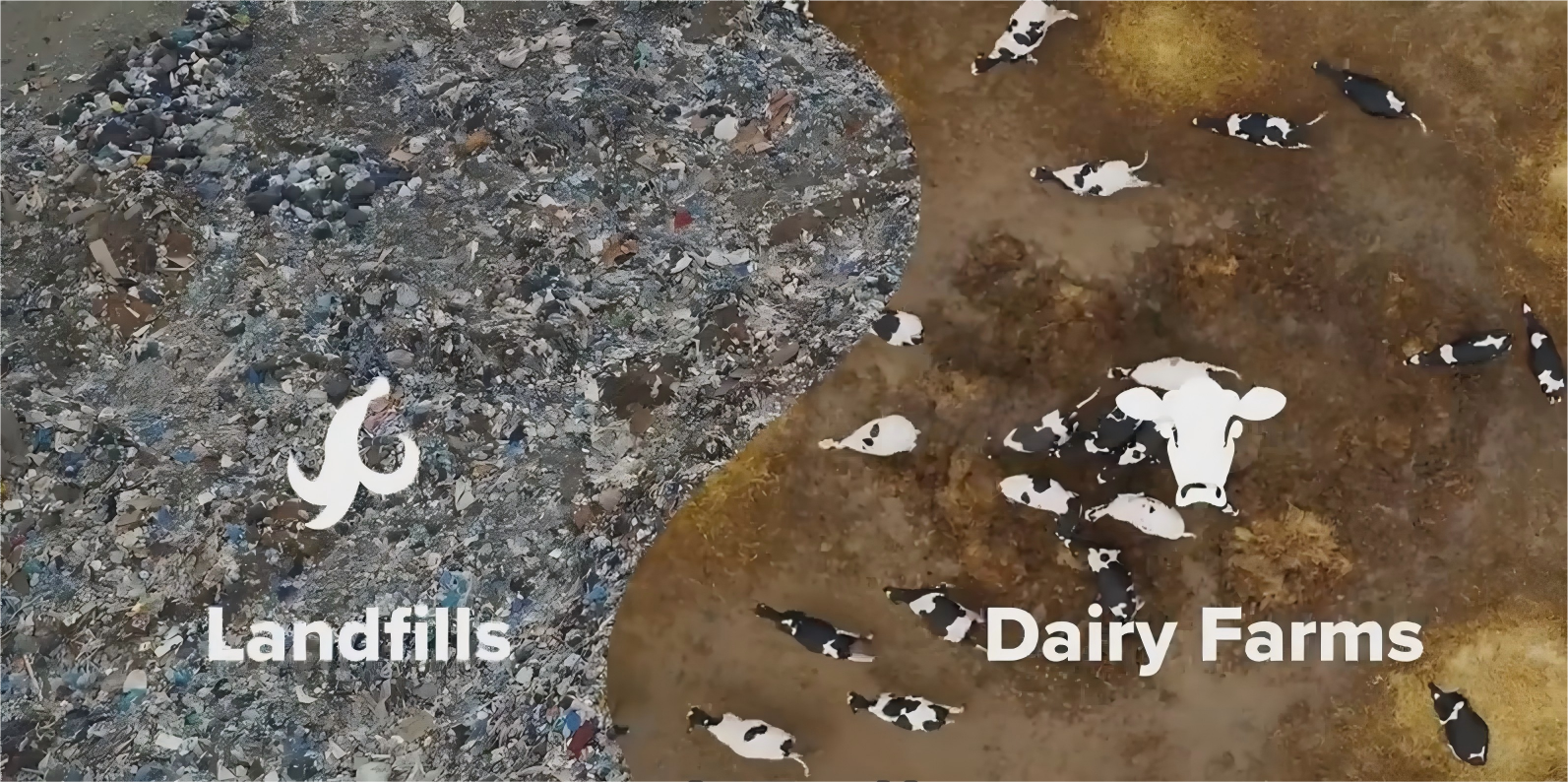
    Traditional landfill disposal can easily pollute soil and groundwater, while biogas systems provide a much more environmentally friendly solution for treating organic waste.

    Through anaerobic digestion , part of the waste is converted into energy, while the remaining residue can still be safely reused in agriculture, achieving resource recycling.

    Compared with direct waste piling, the fermentation process also helps reduce pathogens, parasites, and unpleasant odors, making it safer for the surrounding environment and water sources.

    Conclusion

    Simply put, biogas is not just an energy technology — it is a comprehensive solution that combines environmental protection, agriculture, and energy utilization.

    It can treat waste, reduce pollution, produce renewable energy, improve resource efficiency, and also create economic value.

    That is why biogas is becoming an increasingly important part of green energy development and the circular economy in many countries around the world.

  • How Does a Biogas Plant Work?

    How Does a Biogas Plant Work?

    Reception Area

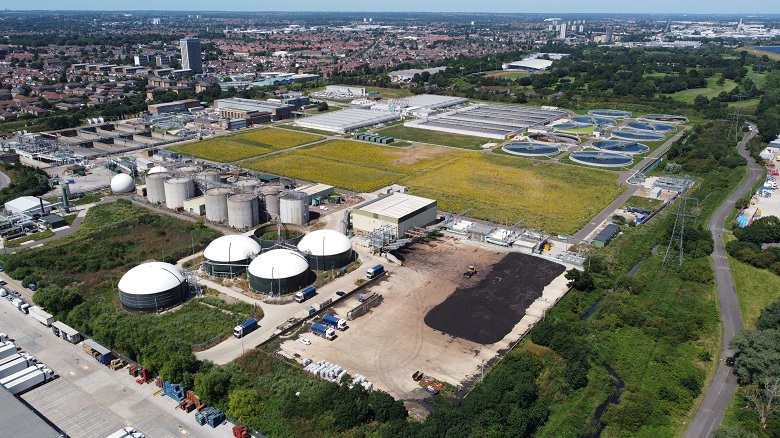
    This area is mainly used for receiving and temporarily storing feedstocks, such as food waste, plant residues, and green waste.

    Some materials cannot be fed directly into the digester and require simple pretreatment first, such as dilution adjustment, mixing, crushing, or impurity removal. These processes are usually carried out in the reception area.

    Storage Tank

    The storage tank is mainly used for storing livestock manure and acts like a raw material warehouse.

    When feeding is needed, the manure is pumped into the digester. After entering the fermentation system, the mixed material is usually called “slurry,” which then undergoes anaerobic digestion to produce biogas.

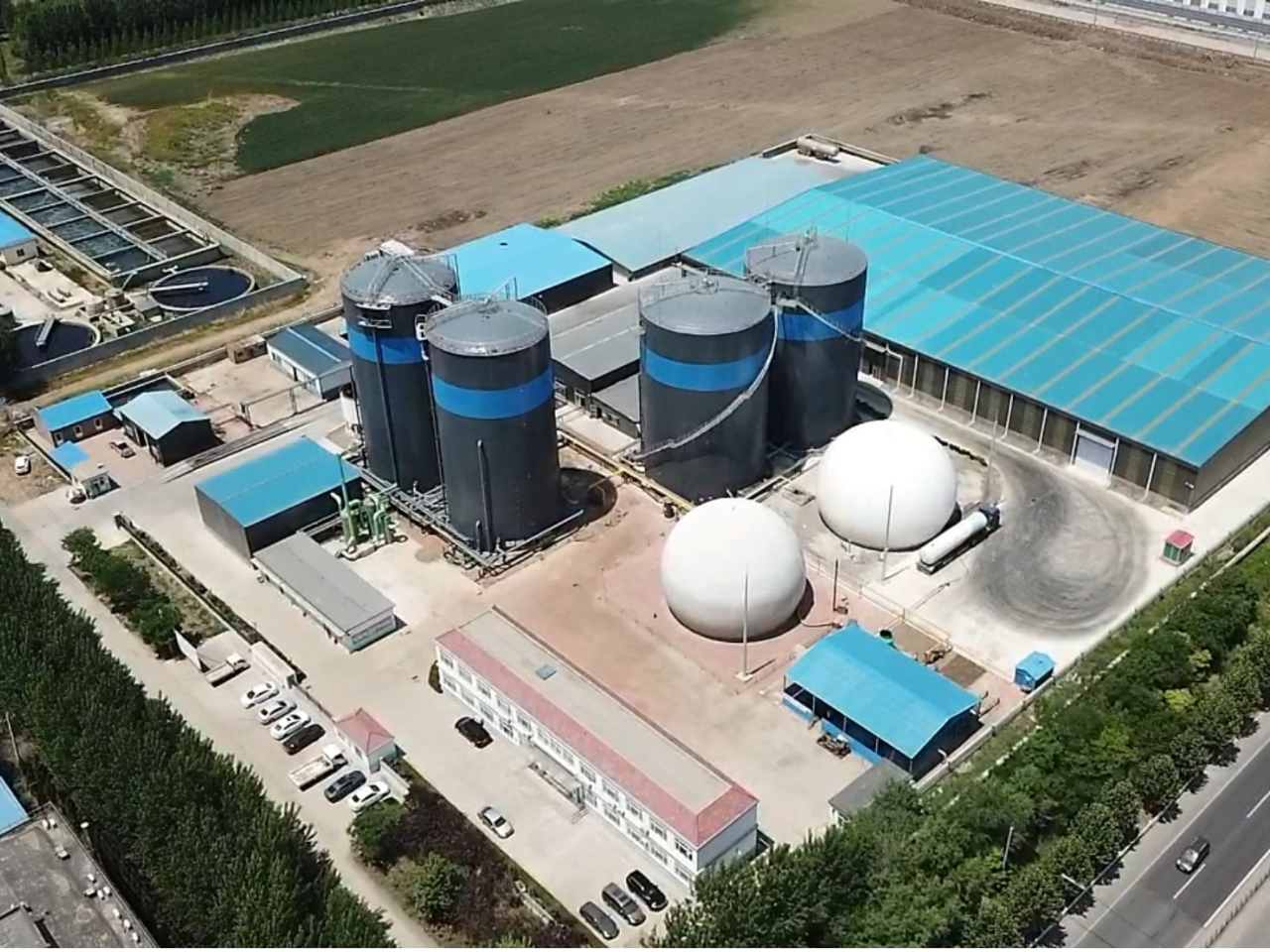
    Digester

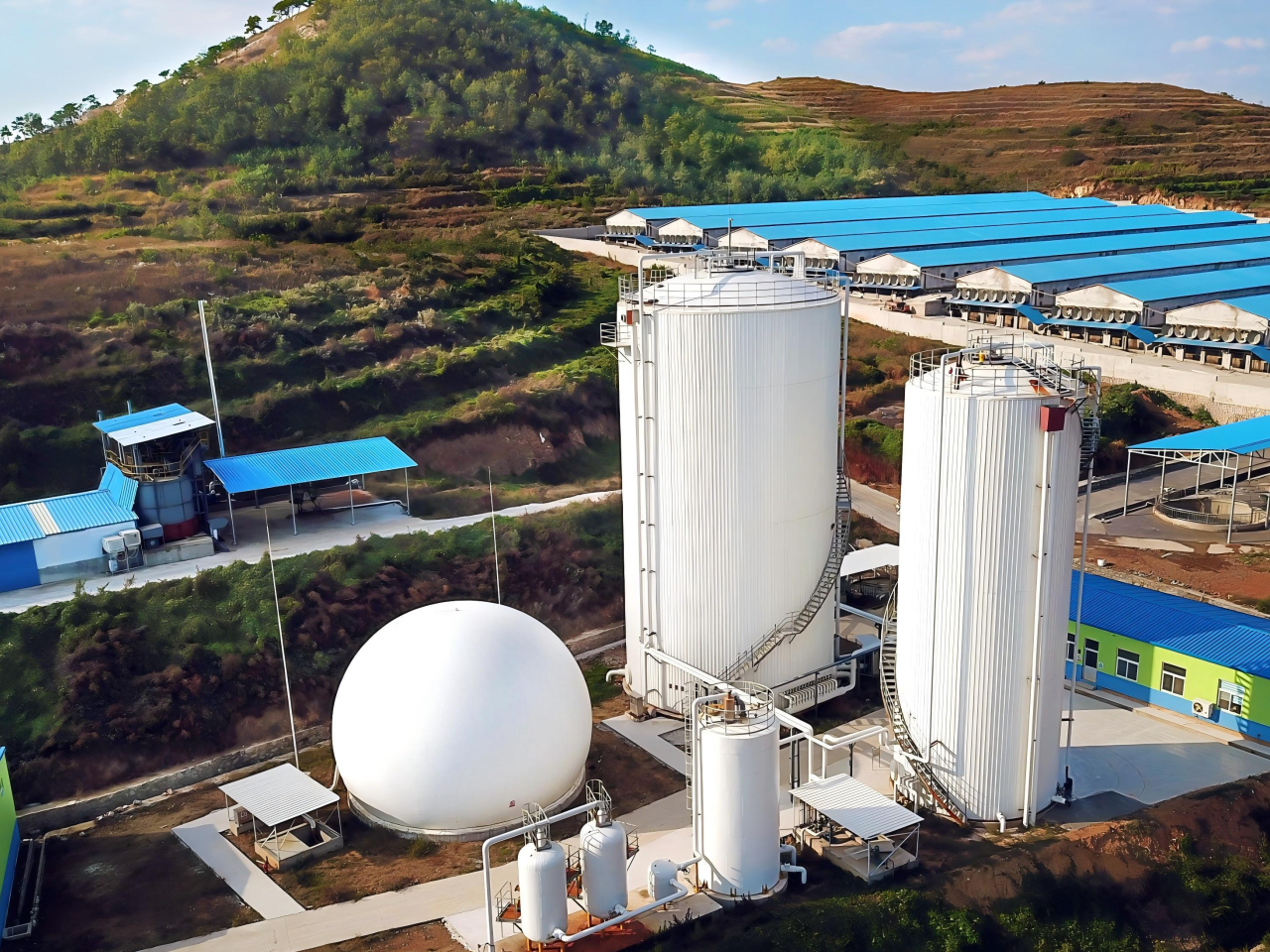
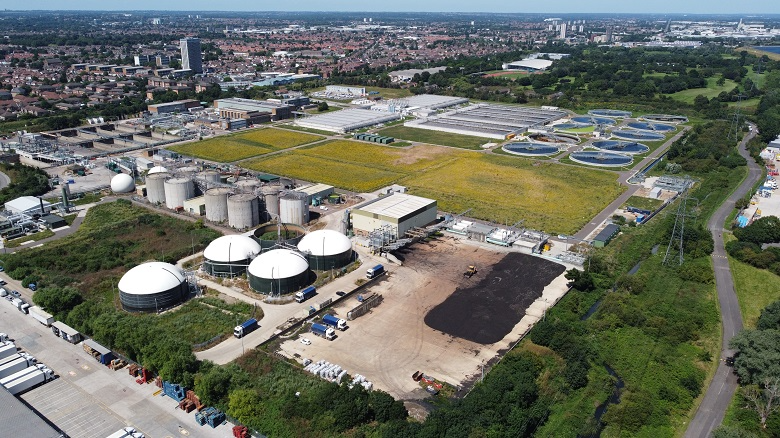
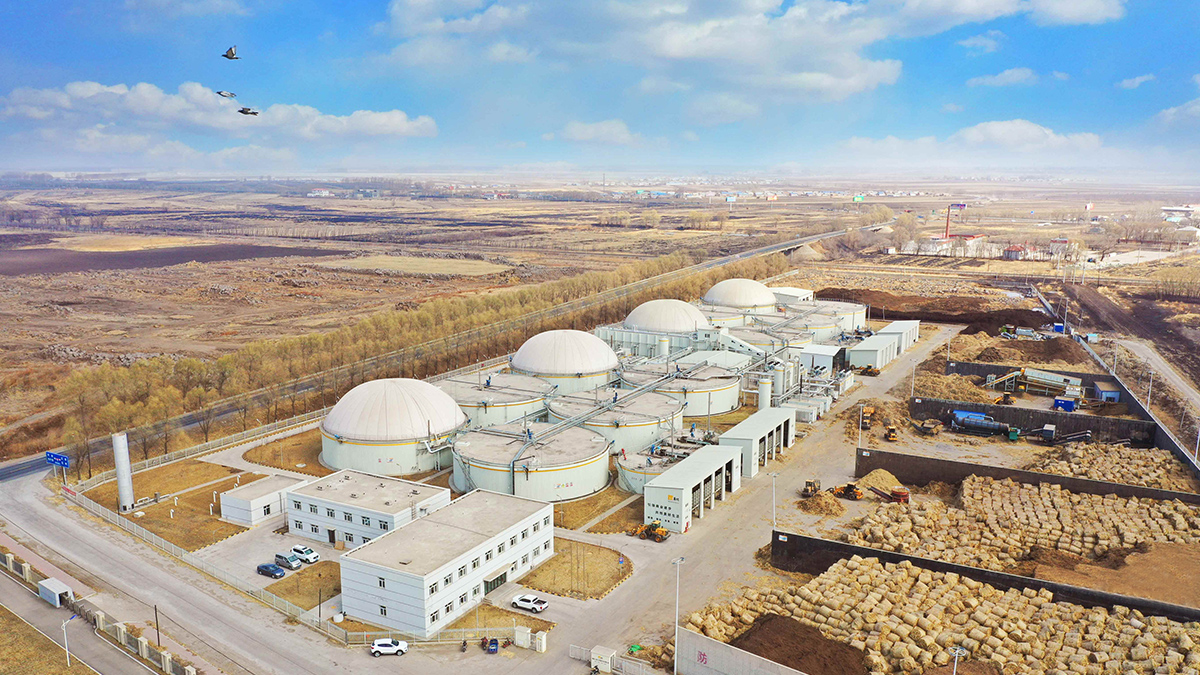
    The digester is the core component of the entire biogas system.

    Inside the digester, organic materials are kept in an oxygen-free environment while being heated and mixed continuously. This creates suitable living and fermentation conditions for microorganisms. As the microorganisms break down the organic matter, biogas is continuously produced.

    These systems usually operate continuously, which means:

    • Feedstock is constantly added into the system
    • Fermented residue is continuously discharged from the system

    To maximize biogas production, some projects also install a post-digester. This allows the remaining gas in the slurry to continue being released, improving the overall gas yield.

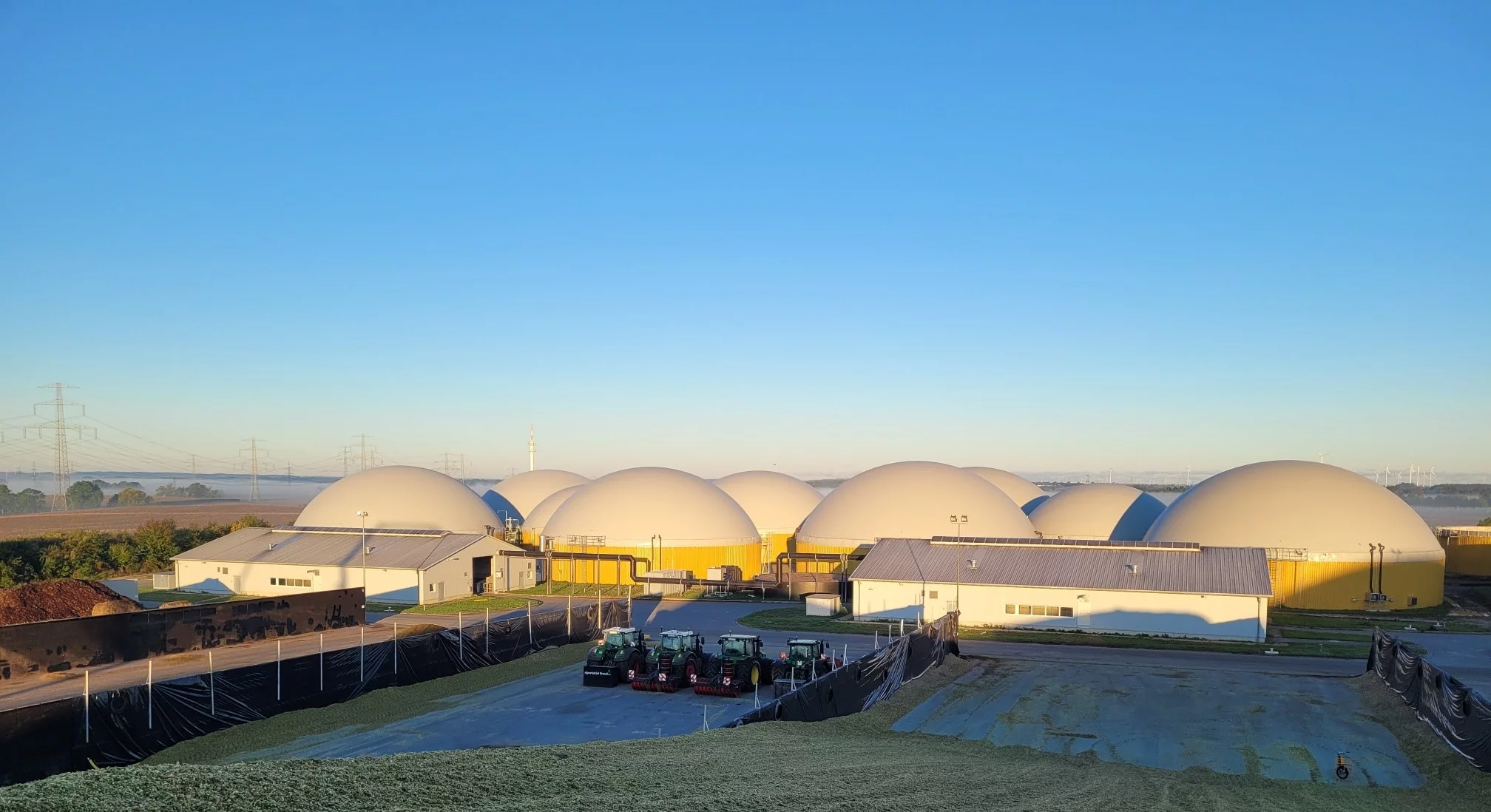
    In large-scale biogas projects, multiple digesters and post-digesters are often installed together to meet higher processing capacities and different process requirements.

    Gas Holder and Gas Upgrading Unit

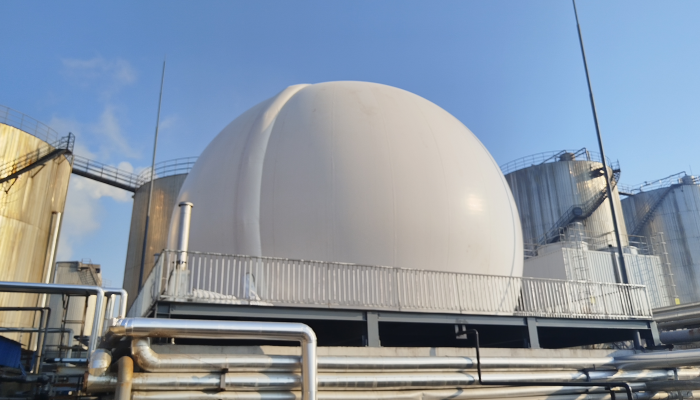
    The gas holder is mainly used to collect and store the biogas produced by the digester, making it a very important part of the entire biogas project.

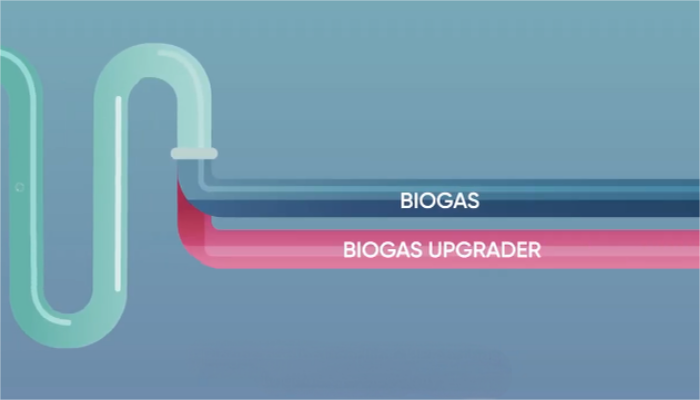
    The stored biogas can then enter a gas upgrading system for purification. In some projects, gas storage and upgrading are integrated into one system.

    During the upgrading process, impurities such as hydrogen sulfide (H₂S) and carbon dioxide (CO₂) are removed to increase the methane content of the biogas, making the gas cleaner and more valuable for utilization.

    Purified biogas can be used for many purposes, including:

    • Injection into the natural gas grid
    • Electricity generation
    • Heat supply
    • Compression into CNG fuel
    • Liquefaction into LNG fuel, etc.

    Combined Heat and Power (CHP) System

    A Combined Heat and Power (CHP) system simply means using biogas to generate electricity .

    After biogas enters the generator set, it is converted into electrical energy, which can be used to operate equipment within the plant or supplied to external users.

    In addition to generating electricity, the heat produced during generator operation is also recovered instead of being wasted. This recovered heat can be used for:

    • Winter heating
    • Hot water supply
    • Digester heating
    • Absorption cooling, etc.

    By utilizing both electricity and heat, the overall energy efficiency of the system is significantly improved.

    Conclusion

    A complete biogas plant is actually made up of many different systems working together.

    However, the exact equipment configuration depends on the project scale, feedstock type, and process requirements.

    No matter how the system is designed, the anaerobic digester always remains the core component of the entire biogas project.

  • What is the difference between natural gas and biogas?

    What is the difference between natural gas and biogas?

    For example:

    • Food waste
    • Pig manure, cow manure, and chicken manure
    • Agricultural waste
    • Sludge

    All of these materials can be used to produce biogas.

    The working principle is actually quite simple.

    You can think of it like this:

    These organic wastes are placed into a large sealed tank with no oxygen inside. Then microorganisms slowly “eat” and break down the waste materials.

    During this process, a combustible gas is continuously produced — and that gas is biogas.

    This process has a professional name:

    • Anaerobic fermentation
    • Or anaerobic digestion

    Put simply:

    • “It’s a process where bacteria turn waste into gas in an oxygen-free environment.”

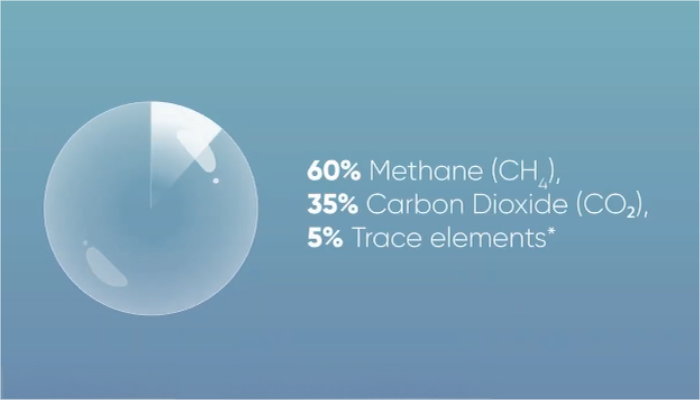
    Biogas mainly consists of:

    • Methane (CH₄): about 60%–65%
    • Carbon dioxide (CO₂): about 30%–35%
    • Nitrogen (N₂): about 0%–5%
    • Hydrogen sulfide (H₂S): about 0%–2%

    When these gases are mixed together, they form raw biogas.

    The entire fermentation process is usually carried out inside large anaerobic digesters.

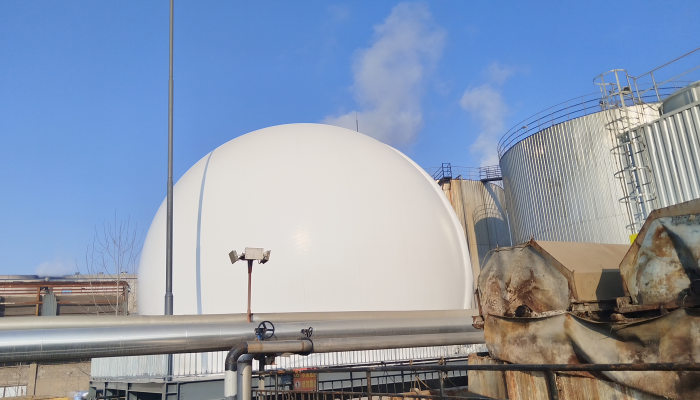
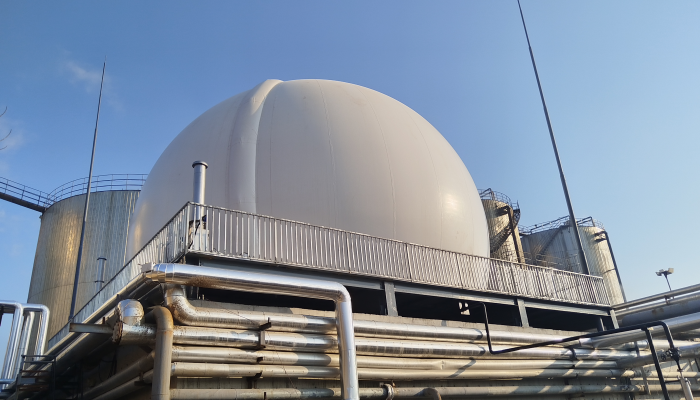
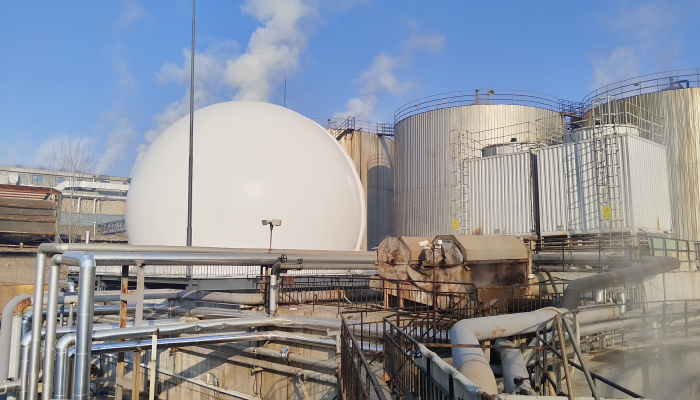
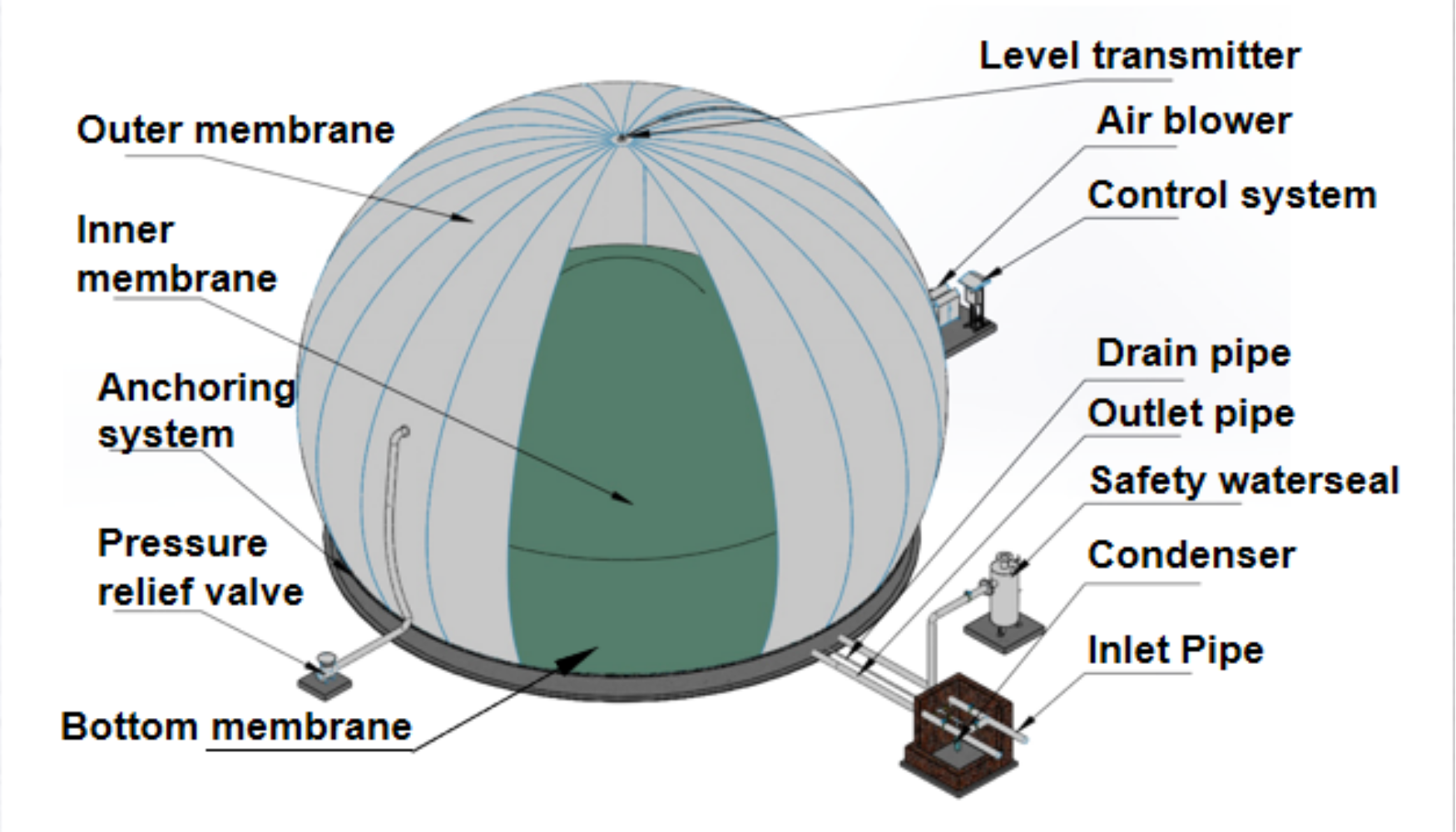
    After the gas is produced, special gas storage equipment is also needed to store it safely, such as double membrane gas holders. These systems help ensure safer and more stable biogas storage and usage.

    The biggest advantage of biogas can actually be summed up in one sentence:

    “Turning waste into energy.”

    Waste materials that were once useless — and could even pollute the environment — can now be treated and reused for:

    • Power generation
    • Heating
    • Cooking
    • Vehicle fuel

    This is a true example of “turning waste into value.”

    So, what is natural gas?

    Natural gas is different from biogas. It belongs to the category of traditional fossil fuels, just like coal and oil.

    It was formed millions of years ago from the remains of ancient plants, animals, and microorganisms that were buried underground and gradually transformed under high temperature and pressure.

    Because of this, natural gas is usually stored deep inside underground rock formations and must be extracted using drilling equipment.

    In everyday life, people have been using natural gas for many years, for example:

    • Home heating
    • Hot water supply
    • Cooking
    • Industrial fuel use

    Natural gas is certainly convenient to use, but its biggest problem is obvious:

    The more we use it, the less there is.

    This is because natural gas is a non-renewable resource. Unlike biogas, it cannot be continuously produced. Once underground reserves are depleted, they cannot be replenished within a short period of time.

    That is why many countries are now trying to develop new energy sources, and renewable energy like biogas is receiving more and more attention.

    So why isn’t natural gas considered truly environmentally friendly?

    Because when natural gas burns, it releases a large amount of carbon dioxide.

    And carbon dioxide is one of the main causes of the greenhouse effect and global warming.

    Although natural gas is cleaner than coal and produces less pollution, it is still a fossil fuel at its core. It still creates carbon emissions, so it cannot really be considered a fully green energy source.

    Biogas, however, is different.

    Biogas comes from:

    • Food waste
    • Manure
    • Agricultural waste

    Simply put:

    These materials would naturally release gas as they decompose anyway.

    The difference is that biogas systems collect and reuse these gases instead of letting them go directly into the atmosphere.

    So unlike fossil fuels, biogas does not add large amounts of “carbon that has been trapped underground for millions of years” back into the atmosphere.

    That is why many people describe biogas as:

    “A carbon-neutral energy source.”

    To briefly summarize the biggest differences between the two:

    Biogas:

    • Can be continuously produced
    • More environmentally friendly
    • Has a wide range of raw material sources
    • Helps treat waste at the same time
    • Can reduce carbon emissions
    • Relatively lower operating costs
    • Better suited for sustainable development in the future

    Natural Gas:

    • A fossil fuel
    • The more it is used, the less remains
    • Underground reserves are limited
    • Produces large amounts of greenhouse gases
    • Expensive to extract
    • Long-term dependence is not sustainable

    To put it even more simply:

    • Natural gas is “consuming the Earth’s reserves,”
    • while biogas is “recycling waste into energy.”

    From an economic perspective:

    • Although biogas systems require upfront investment — such as building anaerobic digesters and double membrane gas holders — their long-term operation is often less complicated than many people imagine.

    Especially in areas with:

    • Large livestock farms
    • Abundant agricultural waste
    • Concentrated food waste sources

    Biogas projects have a major advantage in these areas because the raw materials are usually abundant and continuously available.

    Natural gas is different.

    Natural gas requires:

    • Underground extraction
    • Long-distance transportation
    • Pipeline network construction
    • Continuous supply infrastructure

    All of this makes the overall cost relatively high, while also increasing dependence on limited underground resources.

    So in the long run, many people believe that:

    Biogas can be more economical and better aligned with the future direction of green and low-carbon development.

    To sum it up:

    Although both natural gas and biogas can be used as fuel and energy sources, they are fundamentally very different.

    Natural gas represents traditional fossil energy,
    while biogas represents a more future-oriented green energy solution.

    Simply put:

    Natural gas is “continuously consuming resources,”
    while biogas is “continuously recycling waste into energy.”

    As the world places more emphasis on environmental protection, carbon reduction, and sustainable development, biogas — which can both treat waste and produce energy — is being adopted by more and more industries.


  • What can you put in a digester?

    What can you put in a digester?

    1. Livestock and Poultry Manure (Pig, Cow, and Chicken Manure)

    This is one of the most common feedstocks in biogas projects, especially on livestock farms where the supply is stable and available every day.

    Its main disadvantage is that the “energy content is relatively low.” Most nutrients consumed by animals have already been absorbed, so there is less biodegradable material left for gas production.

    However, it has one major advantage:
    It cannot be discharged directly because it would cause environmental pollution and regulatory issues.

    Using a biogas digester to treat manure therefore achieves two goals at the same time:

    • Meeting environmental protection requirements
    • Producing biogas as a by-product

    2. Food Waste & Green Waste

    Examples include:

    • Food processing residues
    • Agricultural waste
    • Trimmed branches and leaves (the plant materials removed during landscaping maintenance)

    The characteristic of this type of feedstock is:
    It contains more easily degradable organic matter and generally produces more biogas than manure.

    The common treatment method is:

    • Mixing the material with water to form a slurry, then feeding it into the digester for fermentation.

    This process is called wet digestion, which has several advantages:

    • More stable operation
    • Better gas production
    • Easier process control

    3. Sludge (from Wastewater Treatment Plants)

    This refers to the residual sludge left after wastewater treatment.

    The purpose of using sludge in biogas systems is:

    • To avoid waste while continuing to generate biogas.

    The benefits include:

    • Reducing sludge disposal pressure
    • Recovering energy at the same time

    Wet digestion is also commonly used for sludge treatment because it provides more stable operation.

    4. Energy Crops (Plants Specifically Grown for Energy Production)

    Examples include:

    • Corn
    • Sugar beet
    • Rye
    • Straw

    These are not waste materials, but crops specifically cultivated as feedstock for biogas production.

    Characteristics:

    • Relatively high biogas yield
    • Stable supply (production can be expanded as needed)
    • Can also help improve soil quality

    The disadvantage is:

    • They require agricultural land and are not “free waste materials.”

    Summary

    Anaerobic digesters can process many types of “organic waste,” but different feedstocks produce different results:

    • Manure: stable supply but moderate gas production
    • Food waste / green waste: better biogas yield
    • Sludge: combines environmental protection with resource recovery
    • Energy crops: high gas production but require cultivation land
  • How to measure biogas production?

    How to measure biogas production?

    In more serious cases:

    If the pressure becomes too high and the safety system does not respond in time, the membrane may become excessively stretched.

    Just like an overinflated balloon, this can lead to:

    • Deformation
    • Material damage
    • Or even membrane rupture

    Once the membrane is damaged, repair costs can be very high, and the operation of the entire system may be affected.

    On the other hand, problems can also occur if gas is extracted too quickly or excessively.

    In this situation, the pressure inside the tank will become too low.

    To prevent vacuum conditions, the system will automatically draw in air.

    However, once air enters the tank, it dilutes the biogas.

    As a result:

    • Biogas purity decreases
    • Methane concentration becomes lower
    • Combustion performance deteriorates
    • Power generation efficiency is reduced

    Therefore:

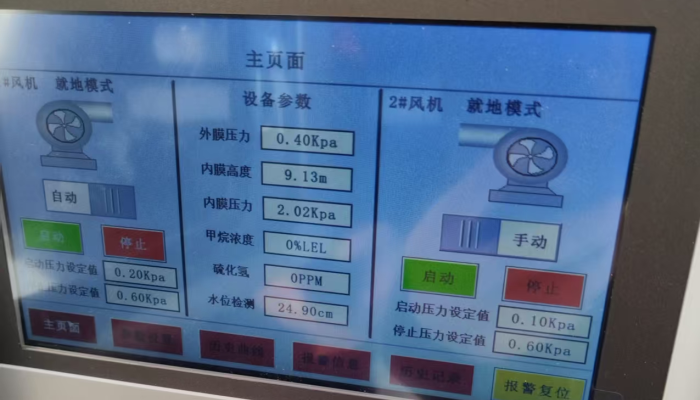
    • Knowing the real-time gas volume inside the gas holder is extremely important.

    Because it directly affects:

    • Safety
    • Equipment lifetime
    • Operational stability

    And it also impacts:

    • Biogas quality
    • Energy utilization efficiency
    • Overall project profitability.

    Three Common Methods for Measuring Biogas

    Inside a double membrane gas holder, it is impossible to directly see how much gas is stored inside.
    Therefore, different methods are used to measure the gas volume.

    MSE commonly uses the following three methods:

    • GasH hydraulic measurement
    • Ultrasonic measurement
    • Counterweight + measuring belt system

    Although the technologies are different, the basic principle is almost the same:

    By measuring how high the inner membrane rises, we can determine how much biogas is stored inside.

    1. GasH Measurement System

    This system uses a pipe connected to the center of the inner membrane roof.

    The pipe is filled with liquid.
    When the inner membrane rises or falls, the liquid pressure inside the pipe changes accordingly.

    By detecting these pressure changes, the system can determine the position of the inner membrane.

    In simple terms:

    • The higher the membrane rises, the more gas is stored inside.
    • The lower the membrane drops, the less gas remains.

    This method is considered an “indirect gas volume measurement.”

    2. Ultrasonic Measurement System

    This system works similarly to radar or a vehicle parking sensor.

    The device sends ultrasonic waves toward the inner membrane.
    After the signal reflects back, the system calculates the distance based on the return time.

    When the distance changes, it means the inner membrane height has changed.
    And when the membrane height changes, the gas volume also changes.

    In addition, the system can preset:

    • Maximum safe position
    • Minimum safe position

    This allows real-time monitoring of the gas holder and helps prevent overfilling or excessive gas consumption.

    3. Counterweight + Measuring Belt System (with Sensor)

    This is the easiest system to understand visually.

    A measuring belt stretches across the gas holder and is fixed to the center of the inner membrane.

    The other end of the belt is connected to a counterweight.

    When the inner membrane expands:

    • The measuring belt moves
    • The counterweight rises accordingly

    The higher the counterweight moves, the more gas is stored inside the tank.

    Because the counterweight moves inside a transparent tube, operators can directly observe the gas level from outside the system.

    In addition, this system is equipped with an electronic sensor that converts height changes into a standard 4–20 mA signal.

    This allows the system to:

    • Connect to PLC systems
    • Perform automatic control
    • Enable remote monitoring
    • Transmit operational data

    Therefore, it is especially suitable for automated biogas systems.

    Conclusion

    In essence, all three measurement methods work based on the same principle:

    • By monitoring how much the inner membrane rises or falls, the system can determine how much biogas is stored inside the gas holder.

    The main differences are:

    • GasH system: measures liquid pressure
    • Ultrasonic system: measures distance
    • Counterweight system: directly indicates membrane position through the counterweight movement

    By using these measurement systems, operators can always know the real-time gas volume inside the gas holder.

    This helps prevent problems such as:

    • Excessive gas pressure damaging the equipment
    • Insufficient gas volume affecting system operation

    At the same time, it improves the overall safety, stability, and reliability of the entire biogas system.