How to measure biogas production?
The reason is actually very simple:
Biogas is continuously being produced. If you do not know how much gas is currently stored inside the tank, problems can easily occur.
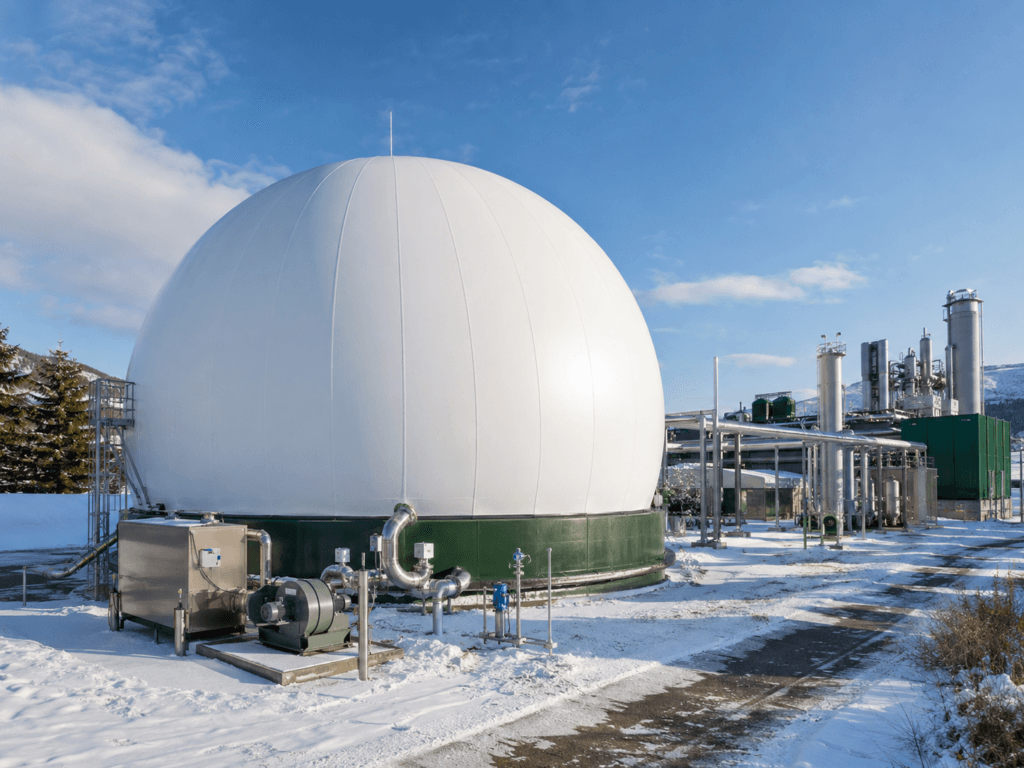
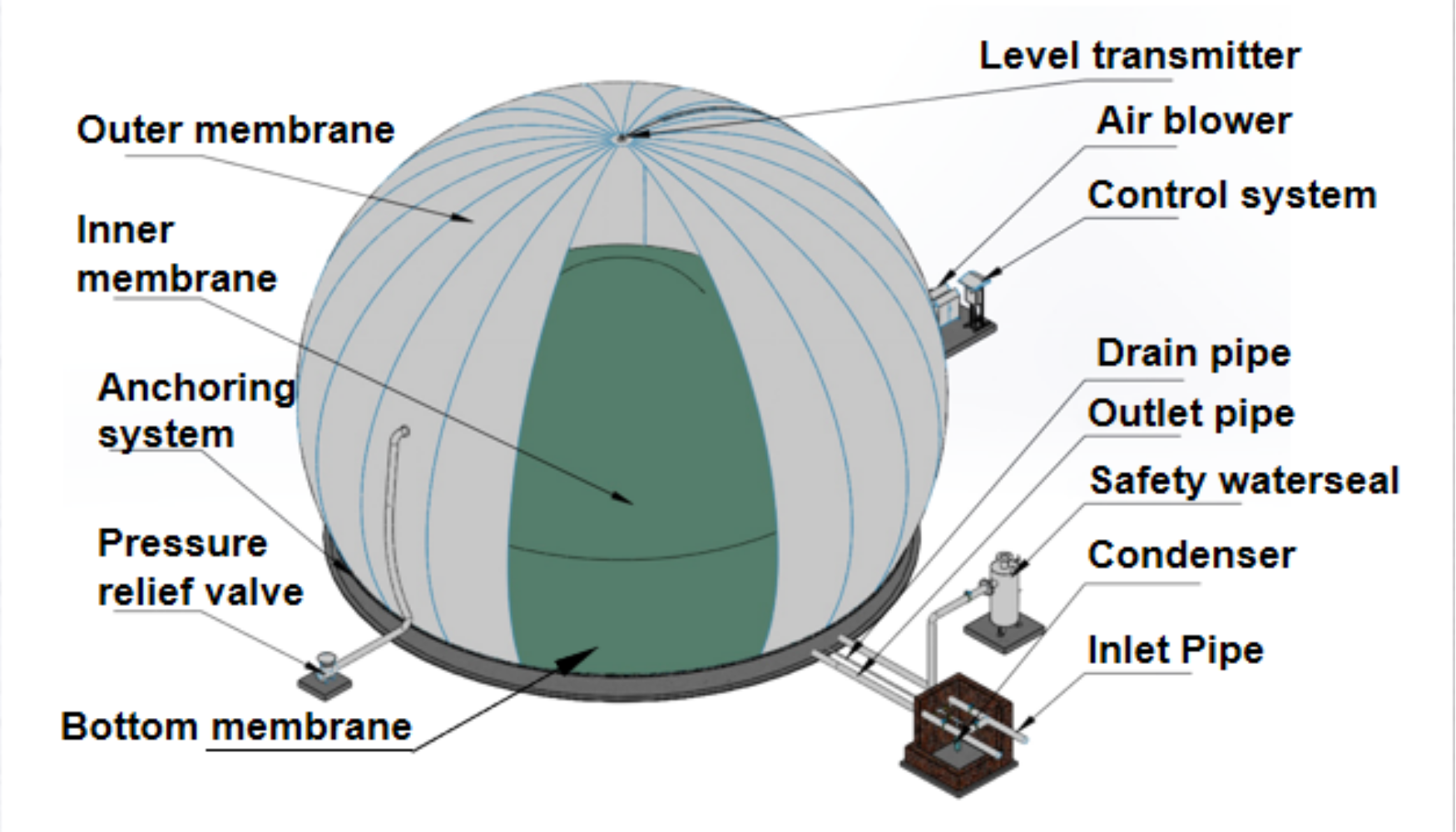
You can think of a double membrane gas holder as a “large inflatable balloon.”
As more biogas is produced, the inner membrane gradually expands.
When gas is consumed, the membrane slowly shrinks again.
However, there is one challenge:
The inner membrane is located inside a sealed space, so operators cannot directly see how much it has expanded.
In other words, it is impossible to know the actual gas volume simply by looking from the outside.
Without proper gas level measurement, many issues may occur.
For example:
If too much gas accumulates, the internal pressure will continue increasing.
To protect the system, the safety valve will automatically release gas to reduce pressure.
Although this protects the equipment, it also means:
Although this protects the equipment, it also means:
The biogas that was produced with effort is directly vented and wasted.
This not only wastes renewable energy, but also results in financial loss.

In more serious cases:
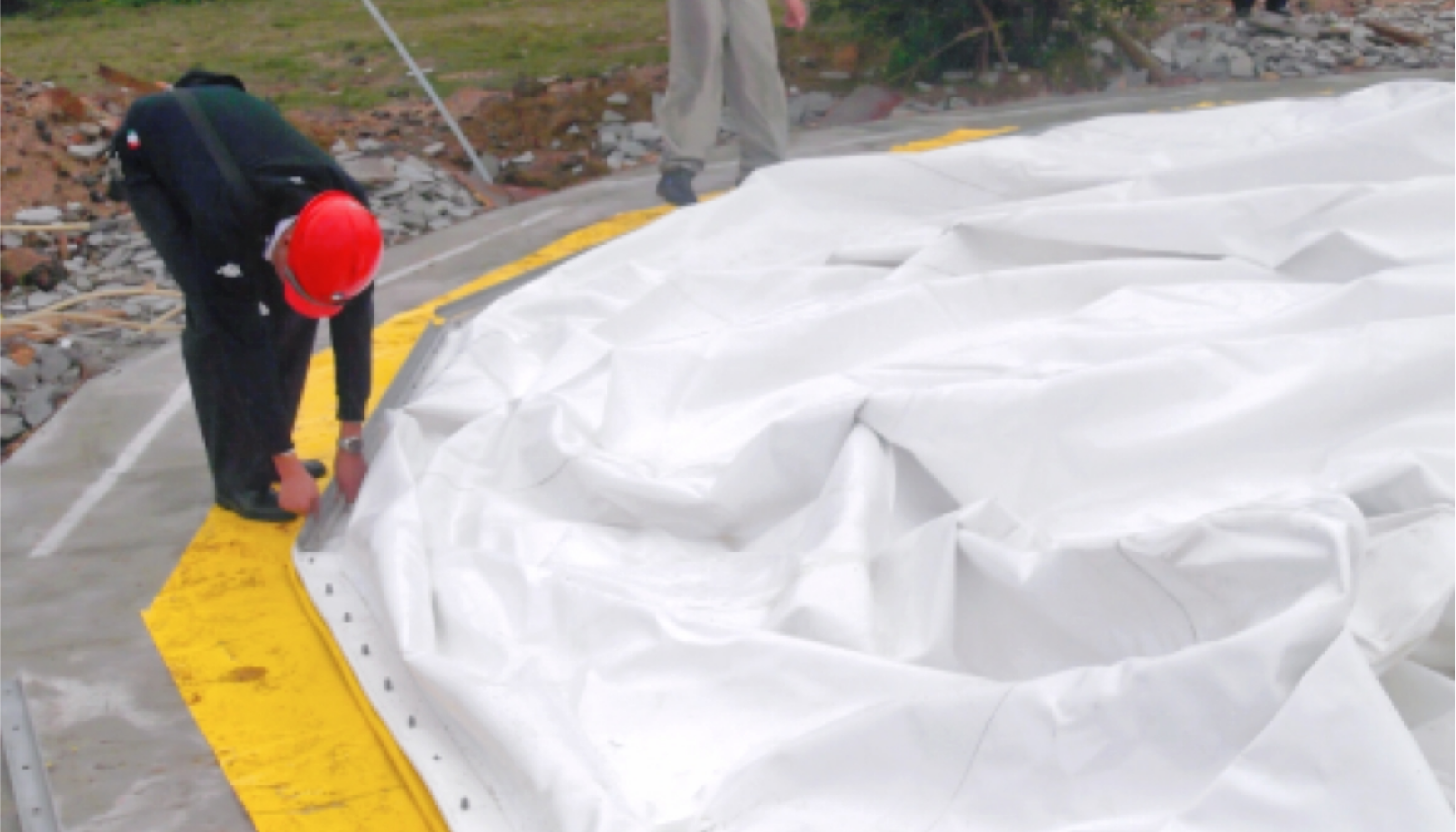
If the pressure becomes too high and the safety system does not respond in time, the membrane may become excessively stretched.
Just like an overinflated balloon, this can lead to:
- Deformation
- Material damage
- Or even membrane rupture
Once the membrane is damaged, repair costs can be very high, and the operation of the entire system may be affected.
On the other hand, problems can also occur if gas is extracted too quickly or excessively.
In this situation, the pressure inside the tank will become too low.
To prevent vacuum conditions, the system will automatically draw in air.
However, once air enters the tank, it dilutes the biogas.
As a result:
- Biogas purity decreases
- Methane concentration becomes lower
- Combustion performance deteriorates
- Power generation efficiency is reduced
Therefore:
- Knowing the real-time gas volume inside the gas holder is extremely important.
Because it directly affects:
- Safety
- Equipment lifetime
- Operational stability
And it also impacts:
- Biogas quality
- Energy utilization efficiency
- Overall project profitability.
Three Common Methods for Measuring Biogas
Inside a double membrane gas holder, it is impossible to directly see how much gas is stored inside.
Therefore, different methods are used to measure the gas volume.
MSE commonly uses the following three methods:
- GasH hydraulic measurement
- Ultrasonic measurement
- Counterweight + measuring belt system
Although the technologies are different, the basic principle is almost the same:
By measuring how high the inner membrane rises, we can determine how much biogas is stored inside.
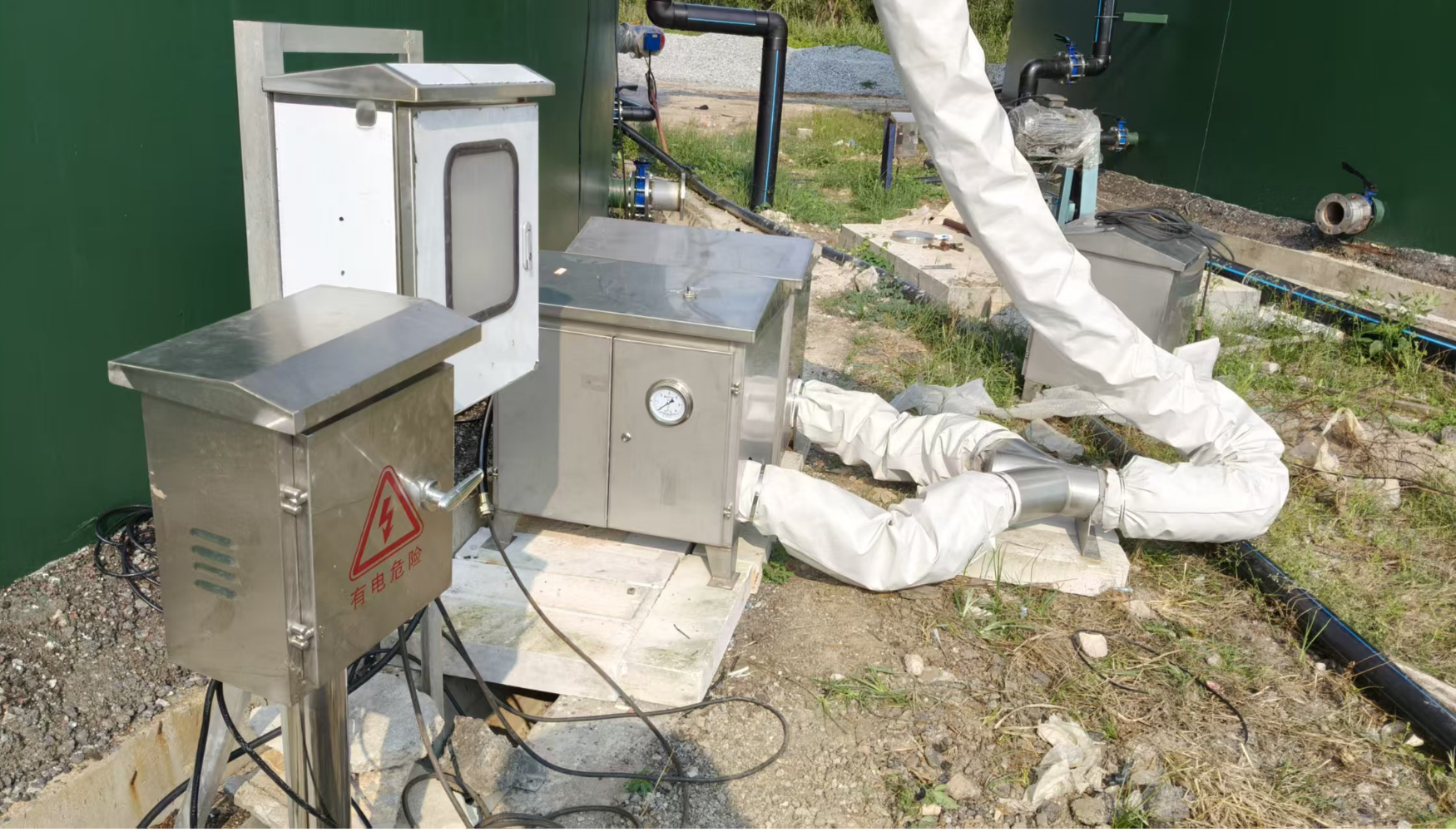
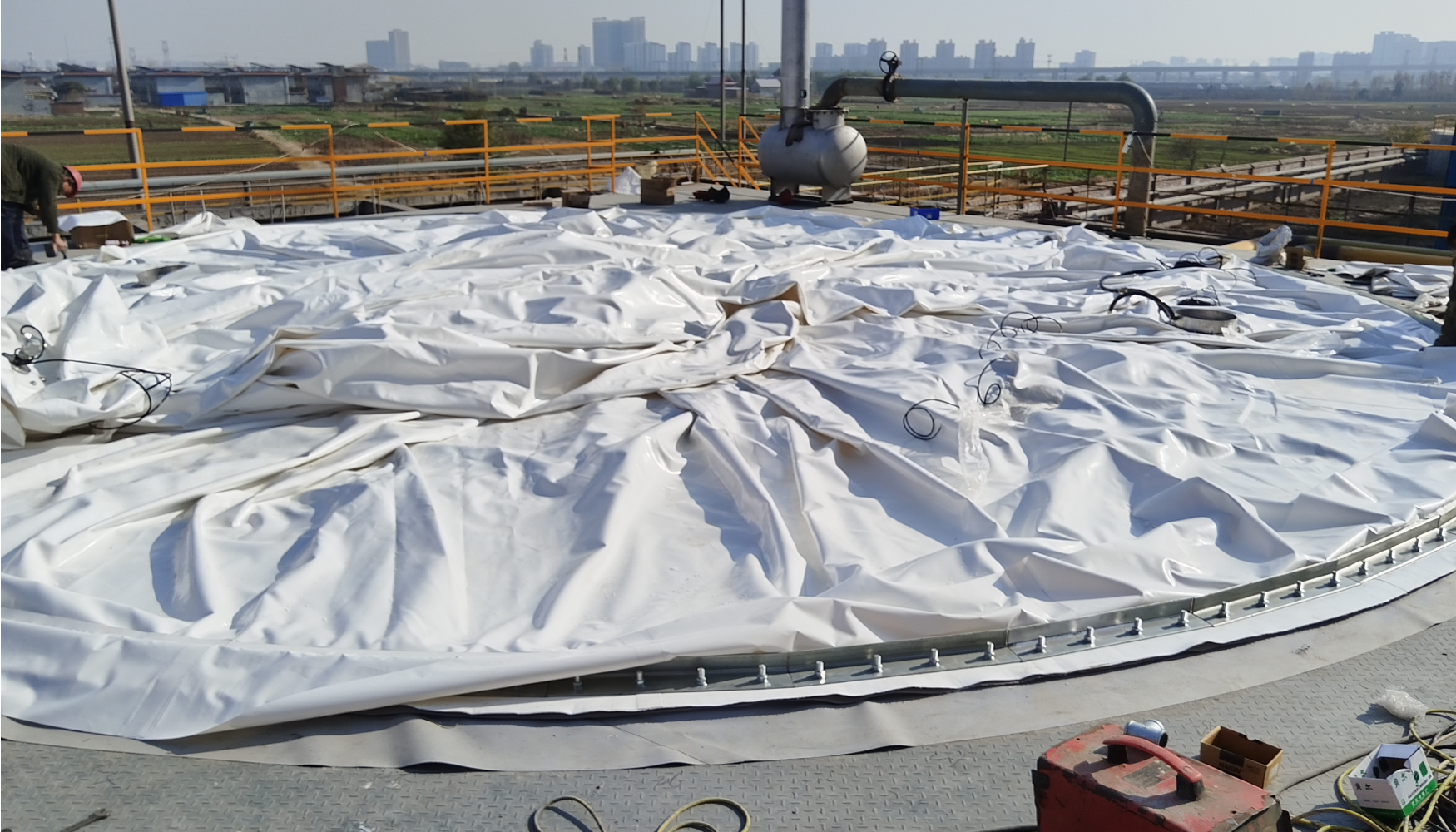
1. GasH Measurement System
This system uses a pipe connected to the center of the inner membrane roof.
The pipe is filled with liquid.
When the inner membrane rises or falls, the liquid pressure inside the pipe changes accordingly.
By detecting these pressure changes, the system can determine the position of the inner membrane.
In simple terms:
- The higher the membrane rises, the more gas is stored inside.
- The lower the membrane drops, the less gas remains.
This method is considered an “indirect gas volume measurement.”
2. Ultrasonic Measurement System
This system works similarly to radar or a vehicle parking sensor.
The device sends ultrasonic waves toward the inner membrane.
After the signal reflects back, the system calculates the distance based on the return time.
When the distance changes, it means the inner membrane height has changed.
And when the membrane height changes, the gas volume also changes.
In addition, the system can preset:
- Maximum safe position
- Minimum safe position
This allows real-time monitoring of the gas holder and helps prevent overfilling or excessive gas consumption.
3. Counterweight + Measuring Belt System (with Sensor)
This is the easiest system to understand visually.
A measuring belt stretches across the gas holder and is fixed to the center of the inner membrane.
The other end of the belt is connected to a counterweight.
When the inner membrane expands:
- The measuring belt moves
- The counterweight rises accordingly
The higher the counterweight moves, the more gas is stored inside the tank.
Because the counterweight moves inside a transparent tube, operators can directly observe the gas level from outside the system.
In addition, this system is equipped with an electronic sensor that converts height changes into a standard 4–20 mA signal.
This allows the system to:
- Connect to PLC systems
- Perform automatic control
- Enable remote monitoring
- Transmit operational data
Therefore, it is especially suitable for automated biogas systems.
Conclusion
In essence, all three measurement methods work based on the same principle:
- By monitoring how much the inner membrane rises or falls, the system can determine how much biogas is stored inside the gas holder.
The main differences are:
- GasH system: measures liquid pressure
- Ultrasonic system: measures distance
- Counterweight system: directly indicates membrane position through the counterweight movement
By using these measurement systems, operators can always know the real-time gas volume inside the gas holder.
This helps prevent problems such as:
- Excessive gas pressure damaging the equipment
- Insufficient gas volume affecting system operation
At the same time, it improves the overall safety, stability, and reliability of the entire biogas system.
RELATED BLOG