
Membrane Gas Holders: An Integrated Solution for Modern Biogas Storage
1. What Is a Double Membrane Gas Holder?
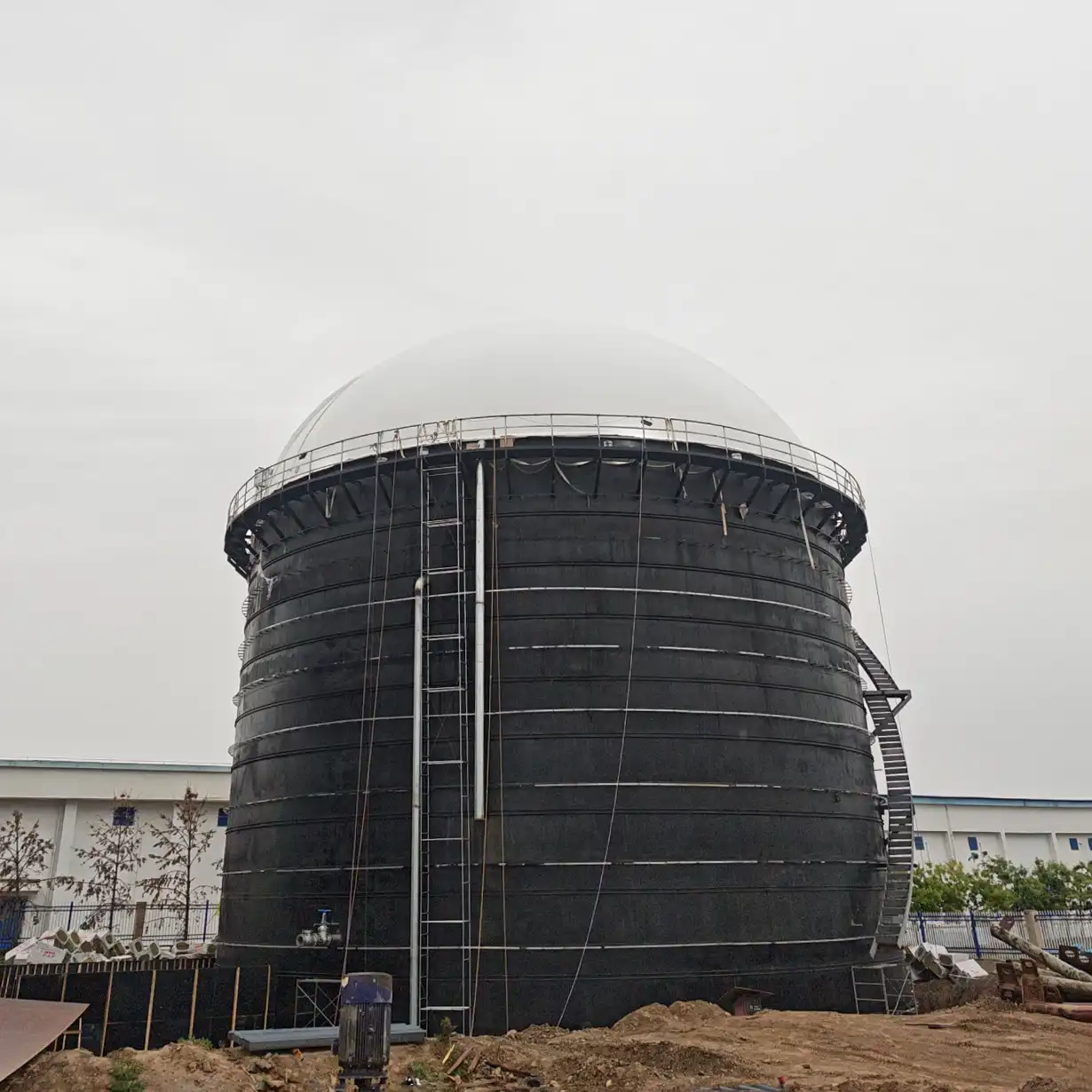
A double membrane gas holder stores gas inside a flexible, gas-tight inner membrane supported by a continuously pressurized outer membrane. Both membranes share a common anchoring ring, while a blower maintains constant air pressure in the space between them.
This creates a fully enclosed, self-regulating gas storage system, with each of the three layers serving a specific function:
- Outer membrane: A weather-resistant, air-supported enclosure that maintains the overall shape and protects the internal gas chamber against wind loads, ultraviolet radiation, and snow loads.
- Inner membrane: A gas-tight barrier that rises and falls as the stored gas volume changes, maintaining a nearly constant gas pressure from empty to full.
- Bottom membrane / sealing layer: A ground membrane welded on site and secured to the concrete ring beam or tank rim, forming a sealed base and providing an installation surface for pipe connections and accessories.
Because pressure is regulated by the blower rather than determined by the stored gas volume, the outlet pressure supplied to combined heat and power (CHP) units, boilers, or gas upgrading systems can typically remain stable within 2–30 mbar. This is one reason operators favor membrane gas holders over rigid gas storage systems.

2. Why an Integrated Design Offers Advantages over Traditional Gas Holders
Traditional gas holders, including steel bell-type holders, water-sealed holders, and separate storage tanks with pressure regulation equipment, have well-known limitations: a large footprint, susceptibility to corrosion, and multiple components requiring separate operation and maintenance. An integrated design addresses all three.
Space and Structural Efficiency
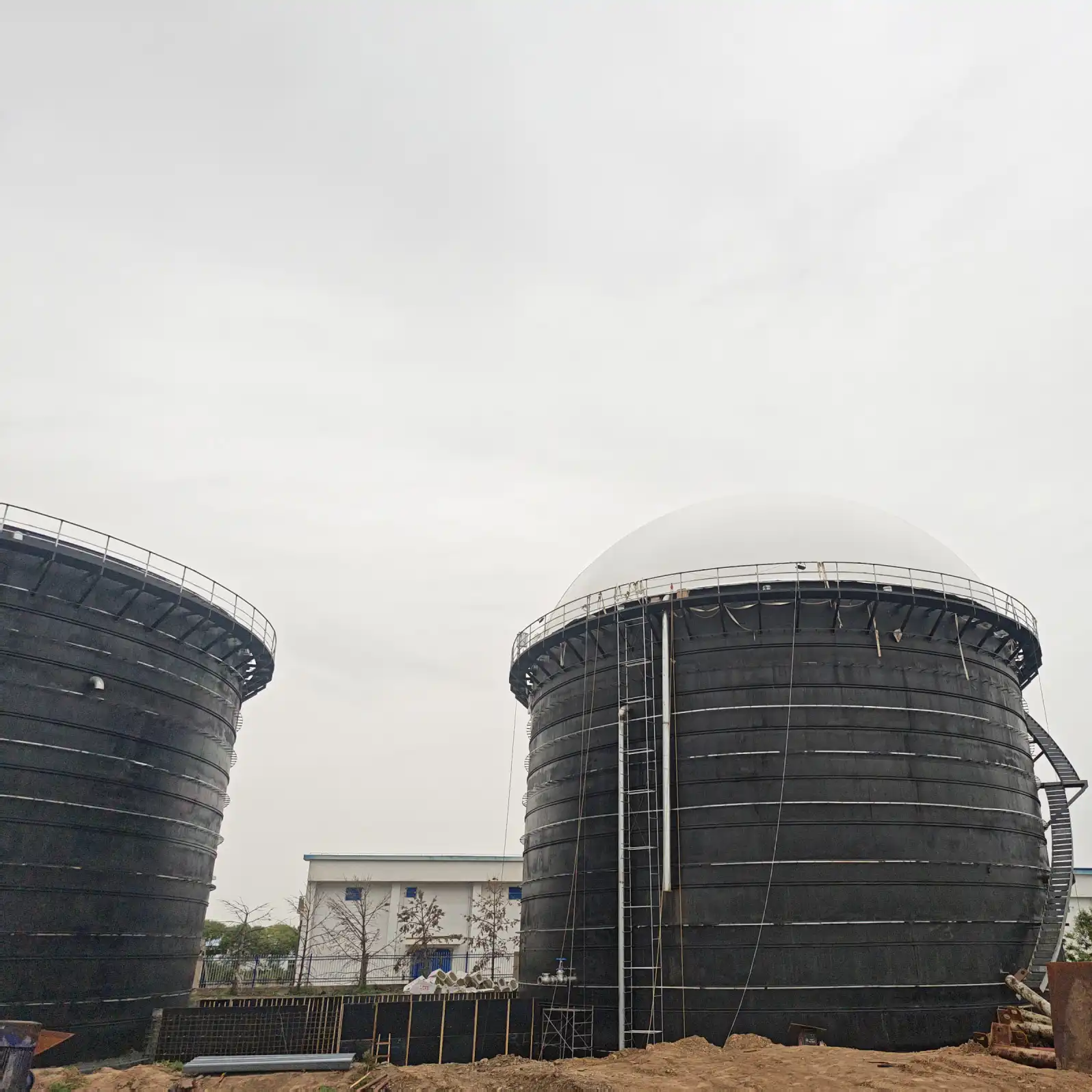
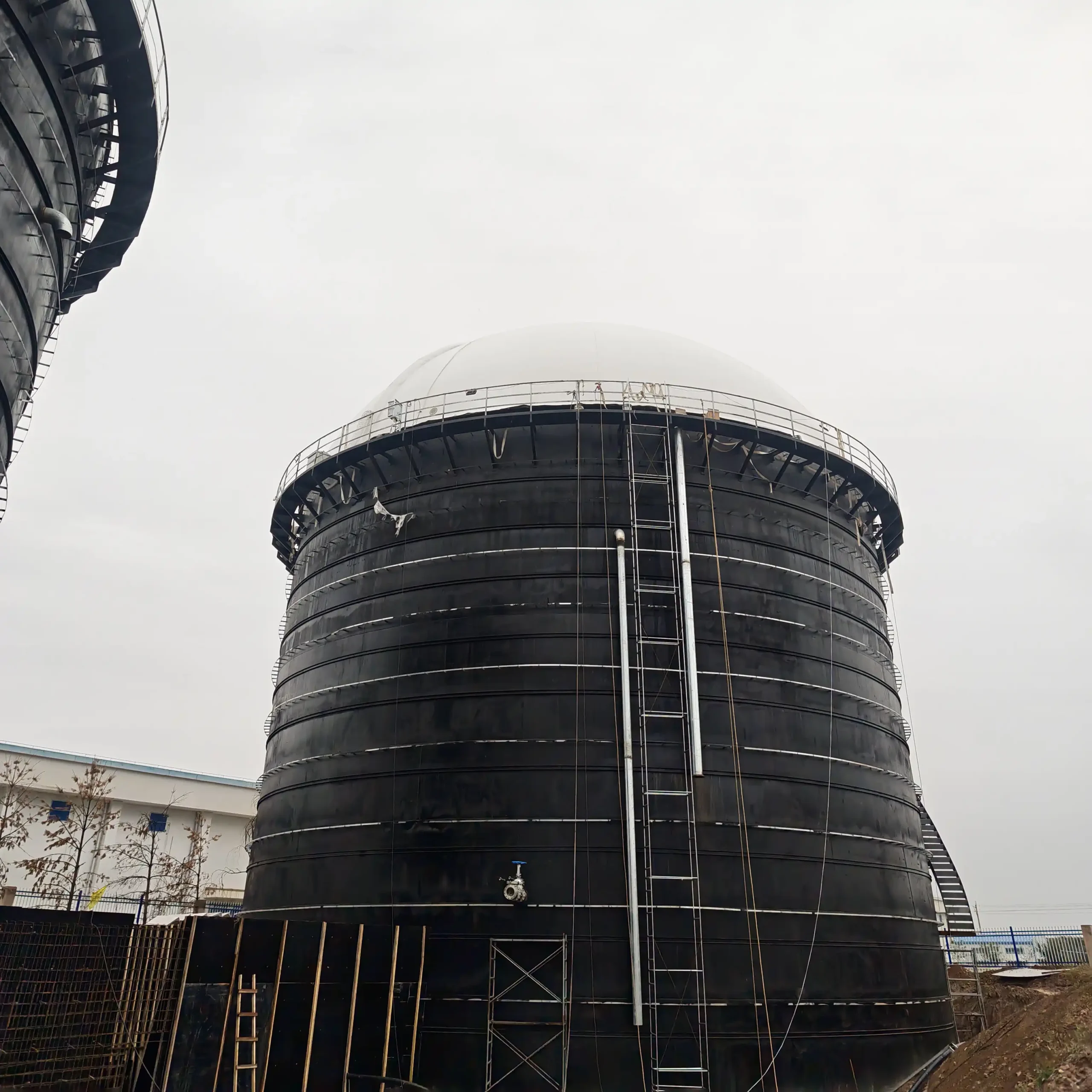
A membrane gas holder combines storage, sealing, pressure regulation, and pressure relief in a single structure. It is typically mounted directly on top of an existing digester or storage tank, avoiding the need for additional land. Where land is expensive or a site is already developed, this advantage alone can be a decisive factor in equipment selection.
Stable Pressure without Sliding Mechanical Wear
Rigid gas holders require guide rails, seals, pistons, or counterweights. These moving components are subject to corrosion and aging. A membrane gas holder has no sliding mechanical seals. Volume changes are accommodated by the flexible membrane, while pressure regulation relies on the blower and control logic rather than precision mechanical components. Fewer moving components mean fewer potential failure points and lower maintenance costs over the equipment’s service life.
Integrated Monitoring and Fail-Safe Pressure Relief
Modern systems incorporate pressure sensors, gas storage level indicators, gas detection points, and automatic pressure relief paths. When gas consumption decreases and the holder approaches full capacity, excess gas can be routed through a controlled flare line instead of allowing overpressure to develop.
If the blower stops unexpectedly, the design provides fail-safe behavior: the inner membrane naturally settles back toward the bottom surface.
3. Three Key Engineering Priorities: Safety, Energy Efficiency, and Environmental Compliance
These three areas are central to how professional buyers evaluate suppliers.
3.1 Safety Engineering
- Material selection: High-strength polyester- or fiberglass-reinforced membranes with PVC / PVDF coatings, together with UV-resistant and antistatic treatments, withstand pressure cycling, hydrogen sulfide exposure, and outdoor weather conditions.
- Redundant protection: Dual pressure relief valves, emergency venting, and overpressure / underpressure interlocks protect the structure under abnormal operating conditions.
- Explosion risk control: Antistatic membranes, grounding, and certified piping components reduce ignition risks in methane-containing environments.
- Digital verification: Digital twins and finite element analysis simulate storm, snow load, and overpressure conditions before manufacture, allowing the design to be validated rather than estimated.
3.2 Energy Efficiency
- Constant-pressure operation: Helps downstream equipment and compressors operate within efficient operating ranges, reducing the need for repeated throttling in response to fluctuating gas supply.
- High usable storage volume: A properly selected membrane gas holder can provide usable storage equivalent to 85–95% of its nominal capacity, whereas rigid gas holders often have significant losses in usable volume.
- Low auxiliary power consumption: Support blowers for typical units require only a few hundred watts. In off-grid projects, they may even be powered by a small photovoltaic array.
- Optional waste heat recovery: Heat recovered from generating equipment or industrial processes can be returned to the digester, completing the energy recovery cycle.
3.3 Environmental Compliance
Support for clean energy: The same structural concept can be used for hydrogen and biomethane storage, helping the equipment support the energy transition rather than limiting it to a single gas.
No routine fugitive emissions: A sealed, gas-tight enclosure replaces open basins and leaking covers, directly reducing methane emissions and odors.
Odor control: The same enclosure contains hydrogen sulfide and trace odor-causing compounds, which is particularly important for wastewater and municipal projects subject to local odor nuisance regulations.
End-of-life responsibility: Modular construction facilitates controlled dismantling and material recovery after decommissioning, supporting the project’s environmental management system.
4. From Equipment Supplier to Energy Solutions Partner
Ten years ago, a gas holder was largely a standard catalog product. Today, leading manufacturers deliver a complete system: customized storage capacity and pressure ratings, an integrated control cabinet, a remote monitoring platform, and on-site commissioning support.
Buyers increasingly expect suppliers to answer, “What happens to my generating unit if the gas holder runs empty at three in the morning?” rather than simply, “What is the price per cubic meter?”
This shift has a significant impact on purchasing decisions. When evaluating a biogas gas holder supplier, you are also choosing the engineering partner who will calculate membrane dimensions, select blowers, establish alarm thresholds, and support your plant throughout its operating life.
5. Procurement Checklist: How to Select a Manufacturer
1. Verify the sizing calculations.
Ask the supplier to provide the calculation basis, including daily gas production, peak gas consumption, and required buffer duration. A supplier who quotes without reviewing gas flow profiles is relying on assumptions.
2. Include membrane specifications in the contract.
Specify the membrane type, coating, UV resistance, antistatic treatment, and membrane warranty, rather than accepting a warranty that covers only the steel anchoring ring.
3. Confirm the pressure range and control logic.
Verify the operating pressure, blower redundancy, and system behavior during a power failure.
4. Review reference projects.
Request projects of similar scale and under comparable climatic conditions. Ideally, speak directly with the operators.
5. Check certifications and standards.
Review CE certification, welding and inspection documentation, and gas industry approval requirements applicable to the target market.
6. Evaluate after-sales support.
Confirm the availability of replacement membranes, remote diagnostics, and clearly defined service response times.