
How Do Biogas Domes Realize Anti-freezing and Anti-leakage Protection?
A biogas dome is a mainstream flexible gas storage device for anaerobic biogas projects. It relies on double-layer membrane structure to store biogas under stable low pressure. In outdoor operation, low-temperature freezing in winter and minor gas leakage are the most common failures that affect system safety and stability. To solve these problems, modern biogas domes adopt systematic anti-freezing and anti-leakage measures in material selection, structural design, production technology and intelligent operation.
1. Low-temperature Resistant Membrane Material
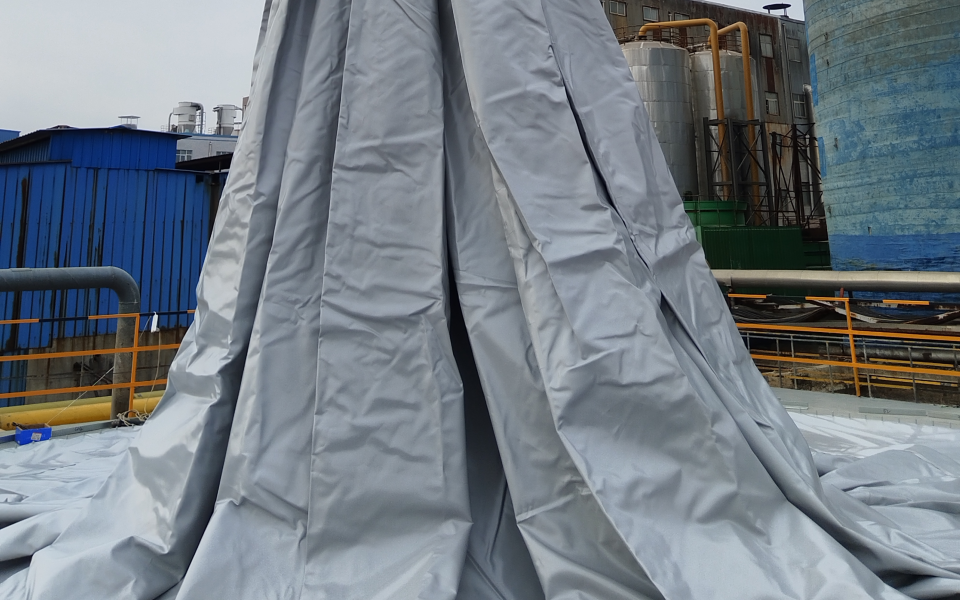
Biogas domes adopt high-strength PVDF composite membrane with professional low-temperature toughening treatment. The special membrane material can maintain stable toughness and flexibility under extreme cold conditions as low as -40°
C, avoiding hardening, cracking and peeling caused by low temperature. The closed air interlayer between the inner and outer membranes forms a natural thermal insulation layer, which effectively isolates external cold airflow. This structure reduces internal temperature difference and decreases water vapor condensation, greatly lowering the risk of ice formation inside the dome.
2. Dry-type Structural Anti-freezing Design
Different from traditional water-sealed gas holders, biogas domes adopt a fully dry structure without any water sealing parts, which fundamentally eliminates hidden dangers of water accumulation and freezing. The dome foundation is designed with a slope to guide condensed water to centralized drainage points. All exposed pipelines and drainage ports are equipped with insulation cotton and electric heat tracing systems. When the ambient temperature drops below zero, the heating system automatically works to prevent pipeline blockage and frost cracking. Meanwhile, all supporting electrical components are customized low-temperature explosion-proof models to ensure stable operation in winter.
3. High-precision Welding Process for Air Tightness
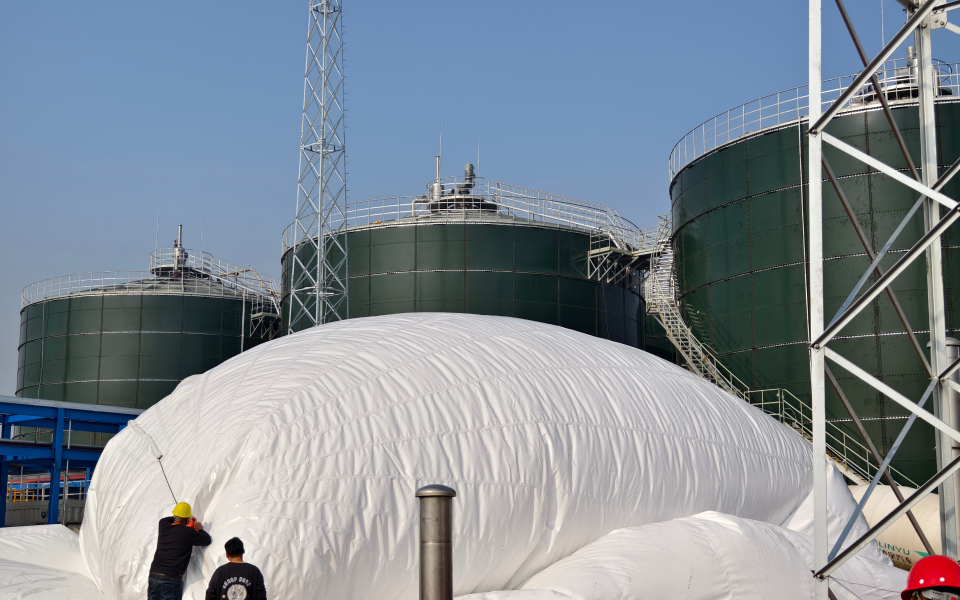
Anti-leakage performance is guaranteed through standardized manufacturing technology. All membrane panels are processed with high-frequency hot-melt welding in a dust-free constant-temperature workshop. The welding seams are completely fused with the membrane body without tiny gaps or pores. Each finished biogas dome must pass a 24-hour constant-pressure air tightness test before delivery. Strict manual leakage inspection ensures no micro-leakage at welding positions, providing reliable sealing performance for long-term operation.
4. Reinforced Foundation and Edge Sealing
The bottom edge is the key sealing area of a biogas dome. The concrete foundation is polished smoothly to prevent sharp stones from piercing the membrane. The membrane edge is fixed with double-layer rubber sealing gaskets and stainless steel pressure plates. Uniform bolt fastening eliminates gap leakage. In addition, all flanges, pipe interfaces and connecting parts are equipped with professional sealing accessories to avoid gas leakage from assembly gaps.
5. Intelligent Monitoring and Early Warning System
Biogas domes are equipped with integrated intelligent sensors to monitor real-time temperature, internal pressure and biogas concentration. The system automatically starts anti-freezing heating devices in cold weather and triggers overpressure protection to avoid membrane damage. Once gas leakage is detected, audible and visual alarms will be activated immediately to assist staff in rapid troubleshooting.
In conclusion, biogas domes achieve excellent anti-freezing and anti-leakage capacity through cold-resistant membrane materials, dry-type structural design, high-precision welding technology, reinforced edge sealing and intelligent monitoring systems. These comprehensive measures effectively avoid freezing damage and gas leakage risks, ensure safe, stable and continuous operation of biogas storage systems in different seasons and complex outdoor environments.