
Another Milestone for a Plant Extract Wastewater Treatment Project
A plant extract wastewater treatment project in Handan, Hebei Province, has reached an important milestone. Its 300 m³ double membrane gas holder has been lifted into place and commissioned, completing the installation of the project’s biogas collection and storage system. The wastewater treatment and resource recovery systems are now entering the integrated commissioning stage.
1. Project Background: Turning Plant Extract Wastewater into a Resource
The plant extraction industry—including the production of traditional Chinese medicine extracts, plant pigments, natural fragrances, and plant proteins—can generate wastewater with a high organic load, high color intensity, and relatively good biodegradability. Discharging this wastewater without treatment would create a substantial pollution load. At the same time, its organic content makes anaerobic digestion and biogas recovery a potential route for reducing pollutants and recovering renewable energy.
The Handan project uses anaerobic digestion to treat plant extract wastewater. The anaerobic reactors produce biogas continuously, but production and demand do not always rise and fall together. Without adequate storage, surplus biogas may need to be sent to a flare, wasting recoverable energy. A suitably sized, reliable gas holder is therefore an important link in the wastewater–biogas–energy cycle.

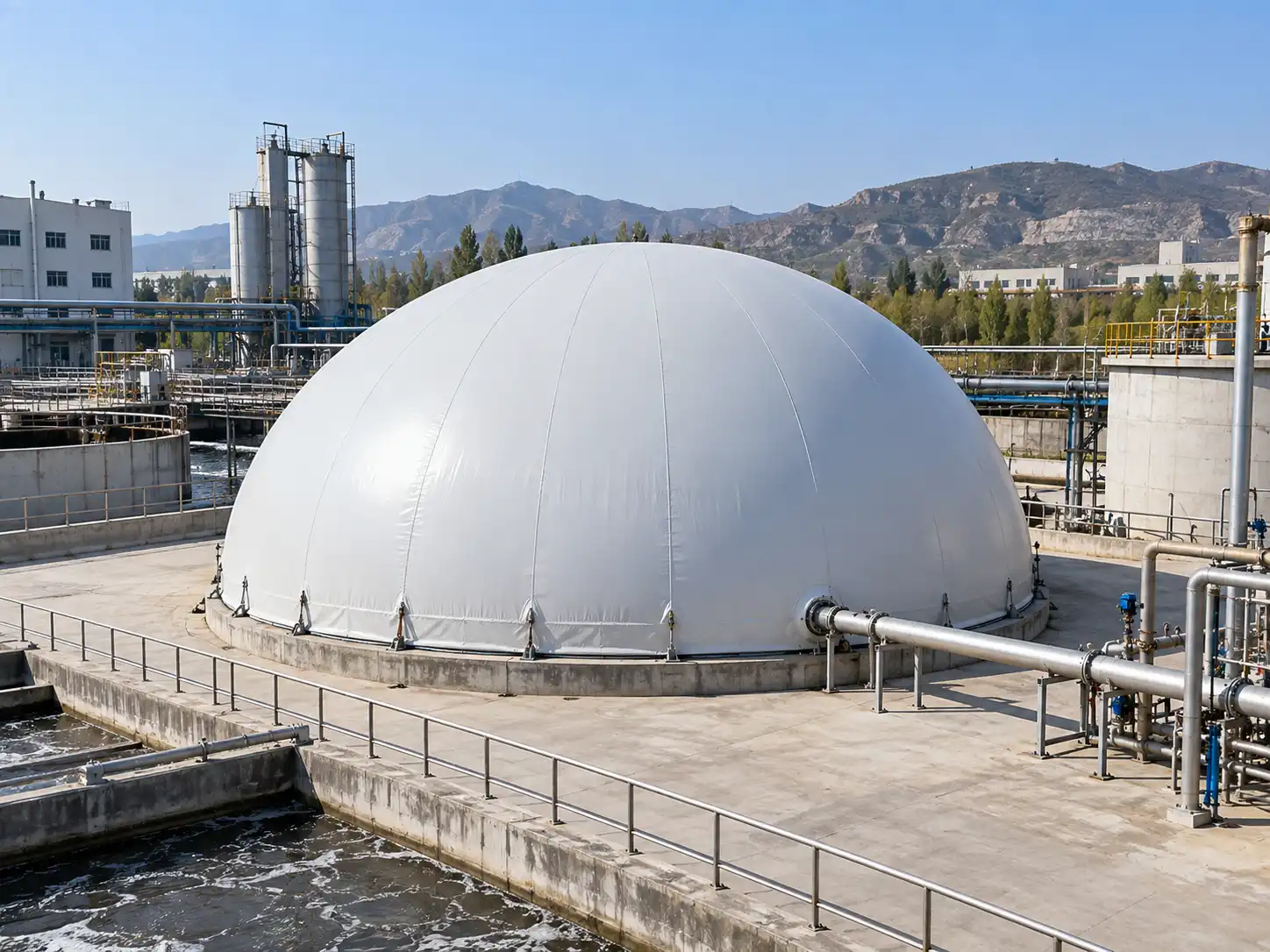
2. Installation of the 300 m³ Double Membrane Gas Holder
The newly installed double membrane gas storage has an effective storage capacity of 300 m³. Located downstream of the anaerobic system, it is designed to buffer and store biogas and deliver it at a stable pressure.
During installation, the construction team completed foundation preparation, bottom membrane laying, inner and outer membrane assembly, airtightness testing, constant-pressure control system commissioning, and integrated testing of the safety devices. According to the project report, the test results met the design requirements.
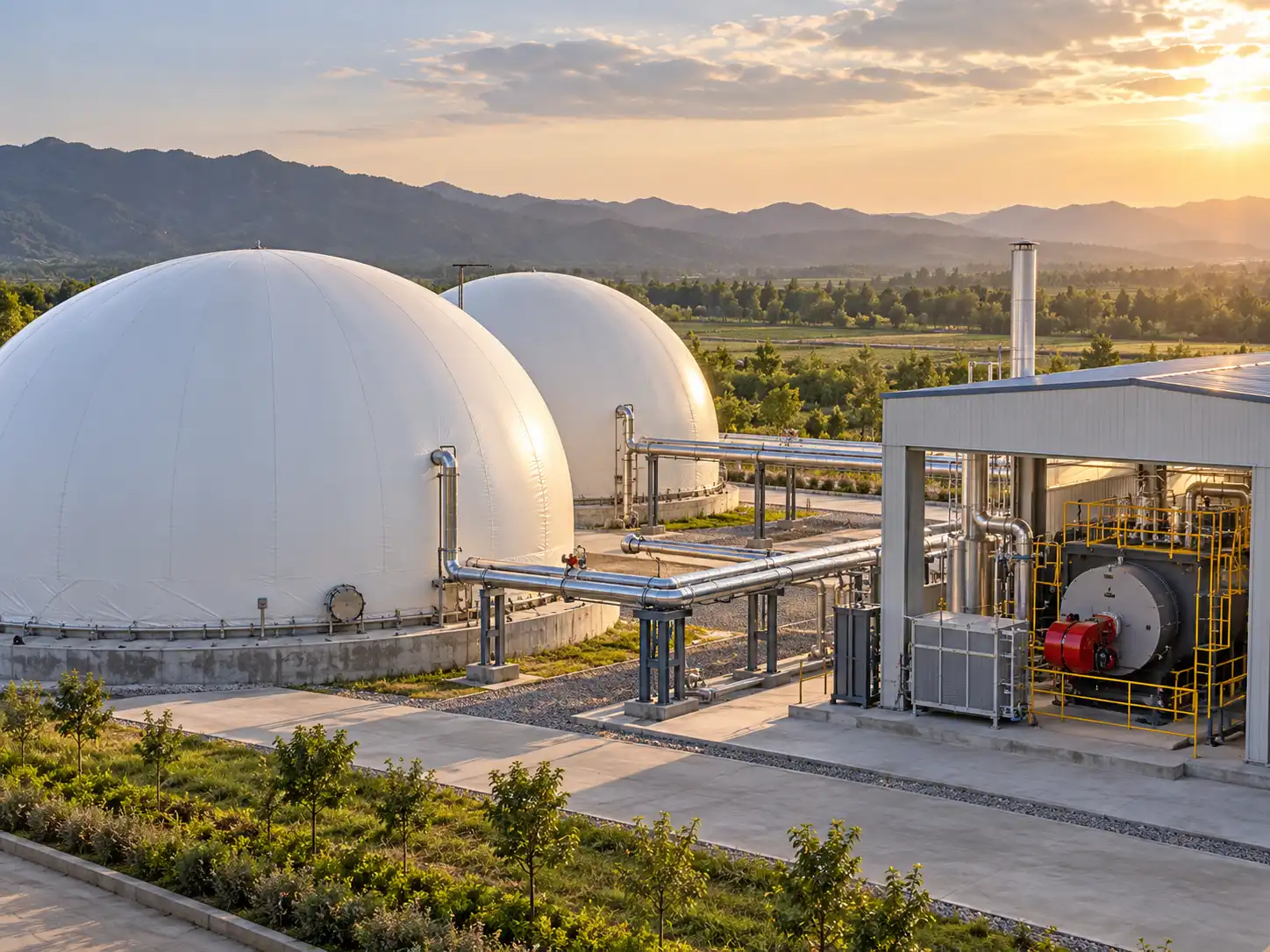
Once operational, the gas holder will store biogas from the anaerobic system and supply it at a stable pressure according to the needs of downstream equipment, such as a biogas boiler, generator, or upgrading system. This will help balance fluctuations in biogas production and consumption.
3. Understanding the Double Membrane Gas Holder
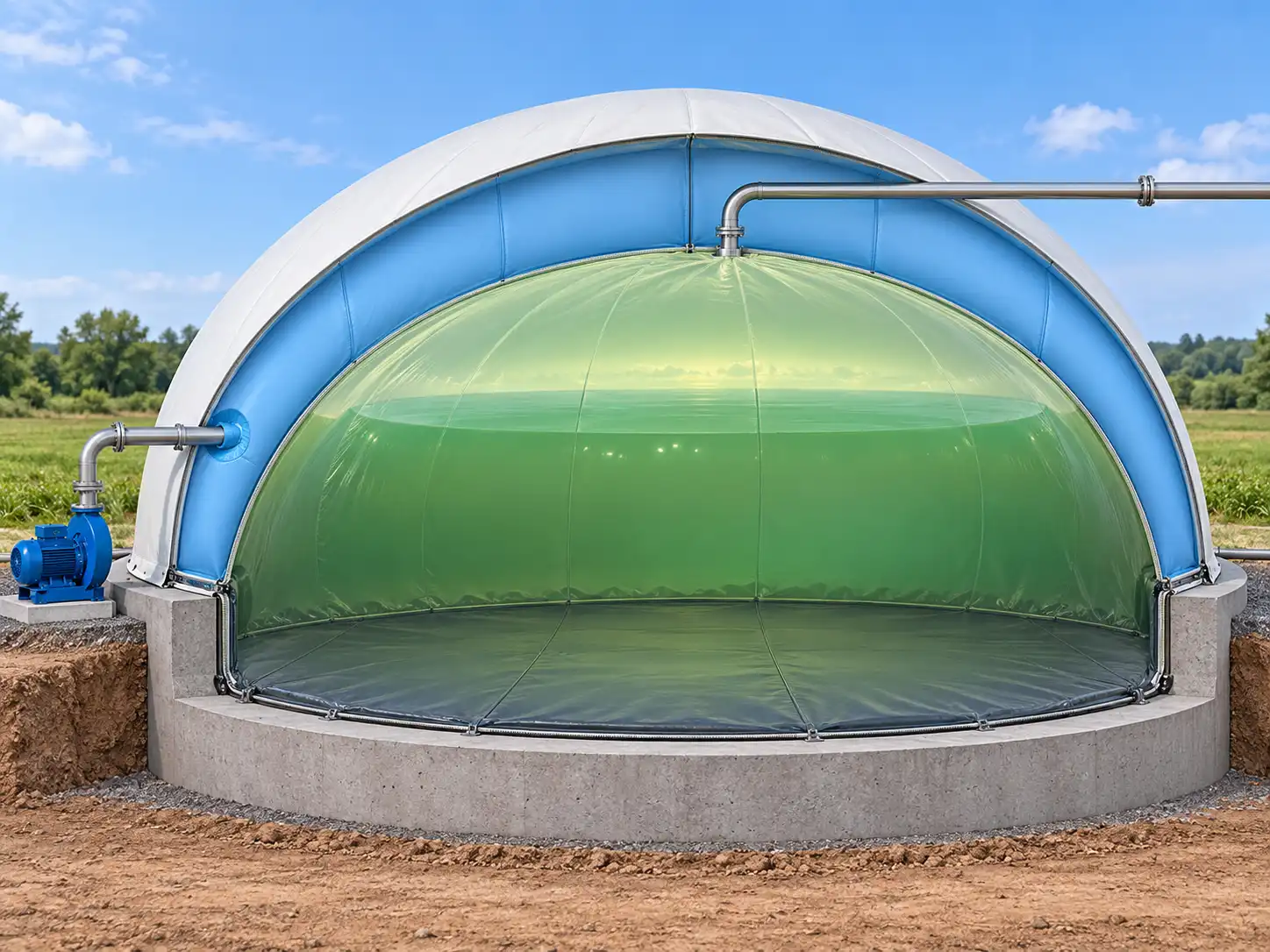
A double membrane gas holder is a flexible biogas storage system. It consists of an inner membrane and an outer membrane, together with a bottom membrane that forms the base of the sealed storage space.
3.1 Structure
- Bottom membrane: Installed on the concrete foundation or anchoring structure. Together with the inner membrane, it forms the sealed biogas storage space.
- Inner membrane: In direct contact with the biogas, it rises and falls as the stored gas volume changes.
- Outer membrane: Forms the weather-resistant exterior. Air supplied by a blower helps maintain its shape and provides resistance to wind, rain, ultraviolet exposure, and snow loads.
Air is supplied to the space between the inner and outer membranes. The pressure control system regulates this air cushion, helping the gas holder maintain a relatively stable biogas outlet pressure as the stored volume changes.
3.2 Operating Principle
- As biogas enters, the inner membrane rises and the storage volume increases.
- As biogas is consumed, the inner membrane descends. The air cushion adjusts to help maintain a stable outlet pressure.
- The control system monitors parameters such as pressure and membrane position or storage level, and coordinates the blower and protective devices for automatic operation.
Handan experiences cold winter weather. Because a double membrane gas holder does not rely on a traditional water-seal channel, it can offer practical advantages for biogas storage in this climate.
4. Project Value: Connecting Wastewater Treatment with Energy Recovery
For the plant extraction company in Handan, the 300 m³ double membrane gas holder is expected to provide three benefits:
- Improved biogas management: Buffer storage can reduce the need to flare surplus biogas when production and demand do not match.
- Greater energy recovery: Collected biogas may be used as boiler fuel, for power generation, or—after further upgrading—as biomethane, depending on the final project configuration.
- More stable operation: A stable gas supply pressure supports the operation of downstream biogas equipment.
Although 300 m³ is a moderate storage capacity, the gas holder plays an important role in connecting wastewater treatment with energy recovery.
5. Conclusion
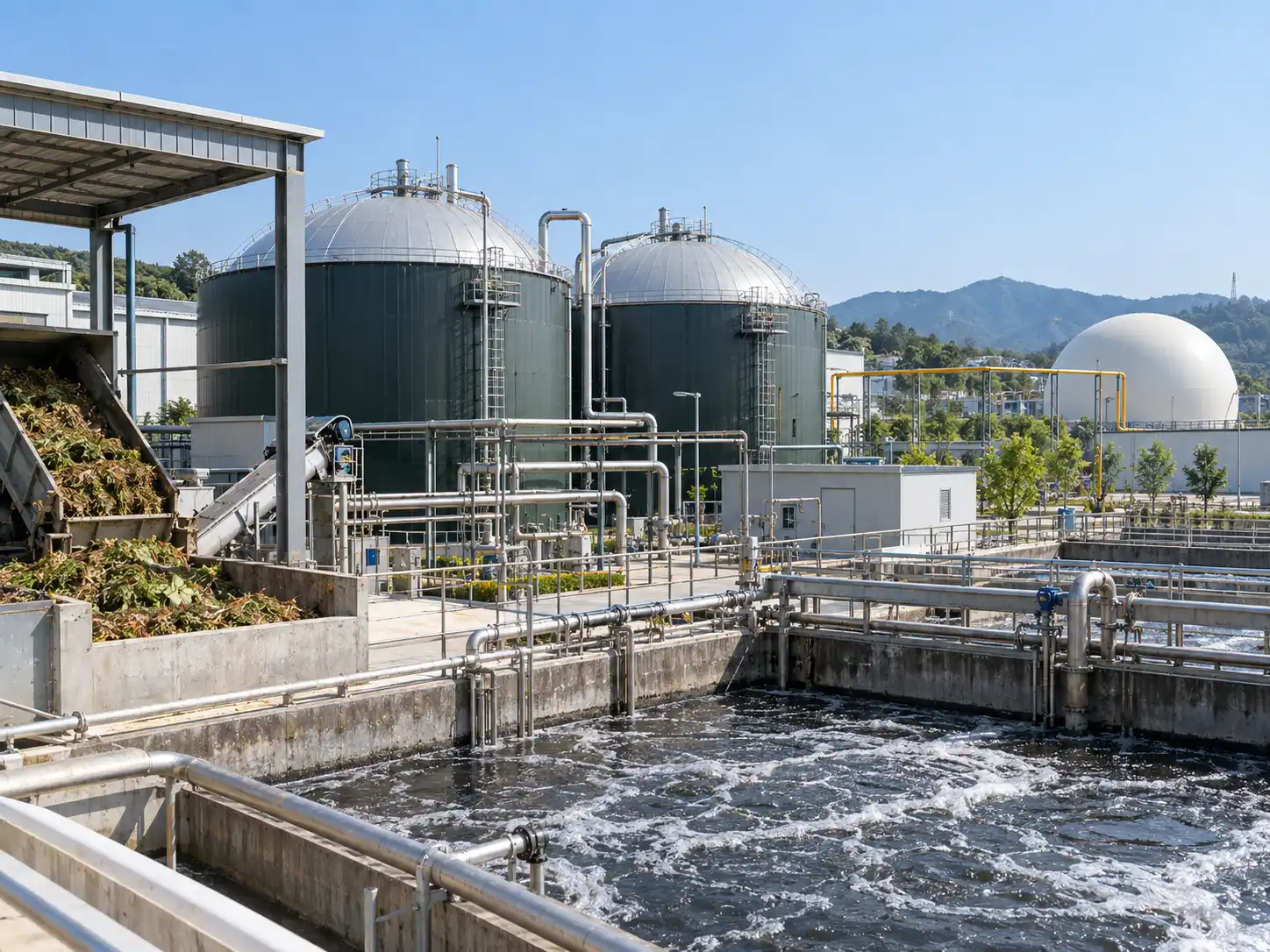
As industries seek better ways to treat high-strength organic wastewater and recover energy, double membrane gas holders provide a flexible option for biogas storage. The installation in Handan marks a step forward for this plant extract wastewater treatment project and offers a reference for similar applications in northern China.