How Double Membrane Gas Holders Support Livestock Manure-to-Biogas Projects
Livestock farms generate large quantities of manure every year. Without proper management, this organic waste can release methane and ammonia, contaminate nearby water sources, create unpleasant odours and increase public health risks in rural communities.
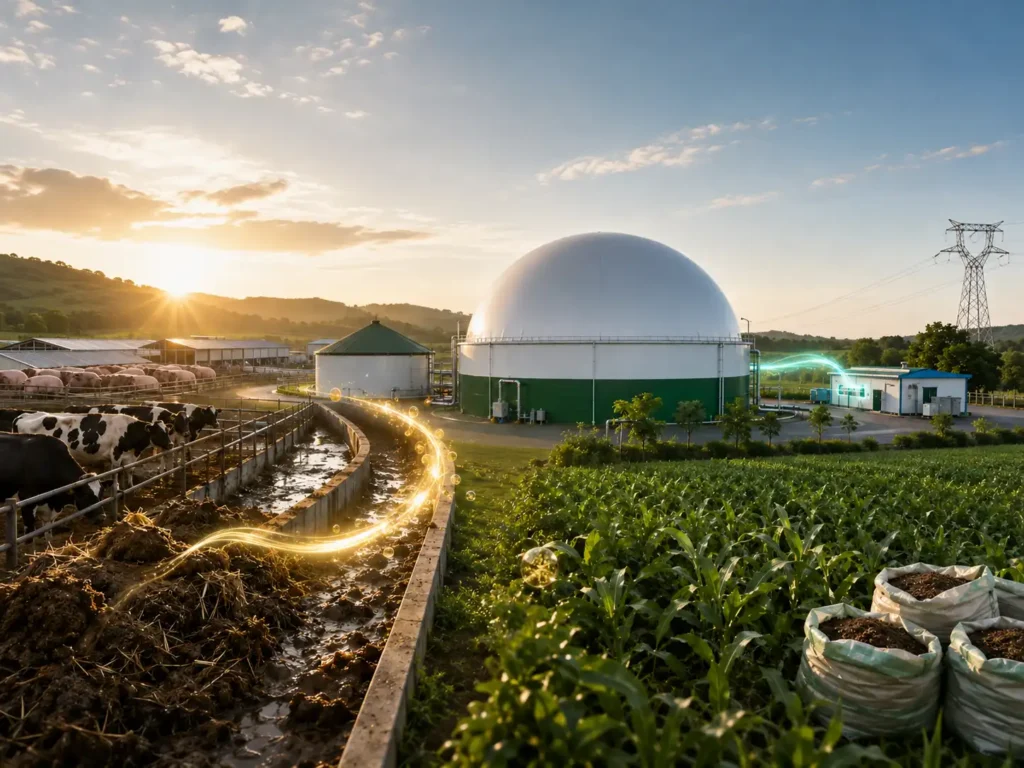
However, livestock manure is not simply waste. Through a properly designed biogas engineering system, it can be converted into renewable energy and valuable organic fertilizer.
Anaerobic digestion breaks down manure in an oxygen-free environment and produces three useful outputs:
- Biogas for electricity generation, heating or biomethane production
- Digestate solids for organic fertilizer production
- Liquid digestate for irrigation and soil improvement
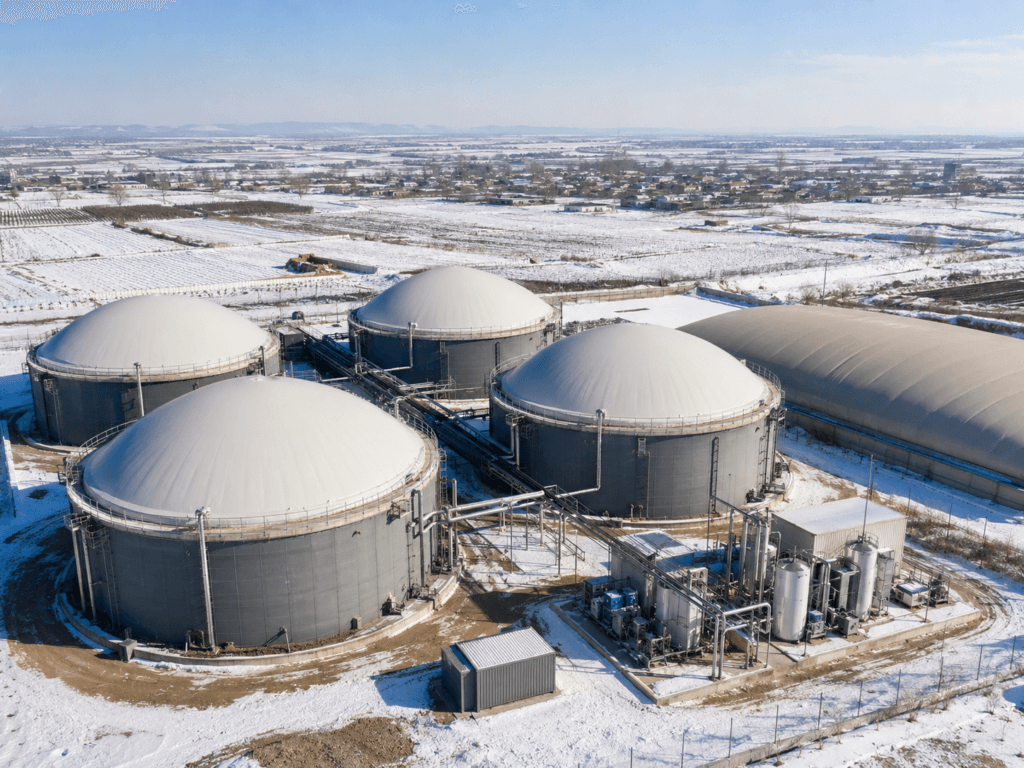
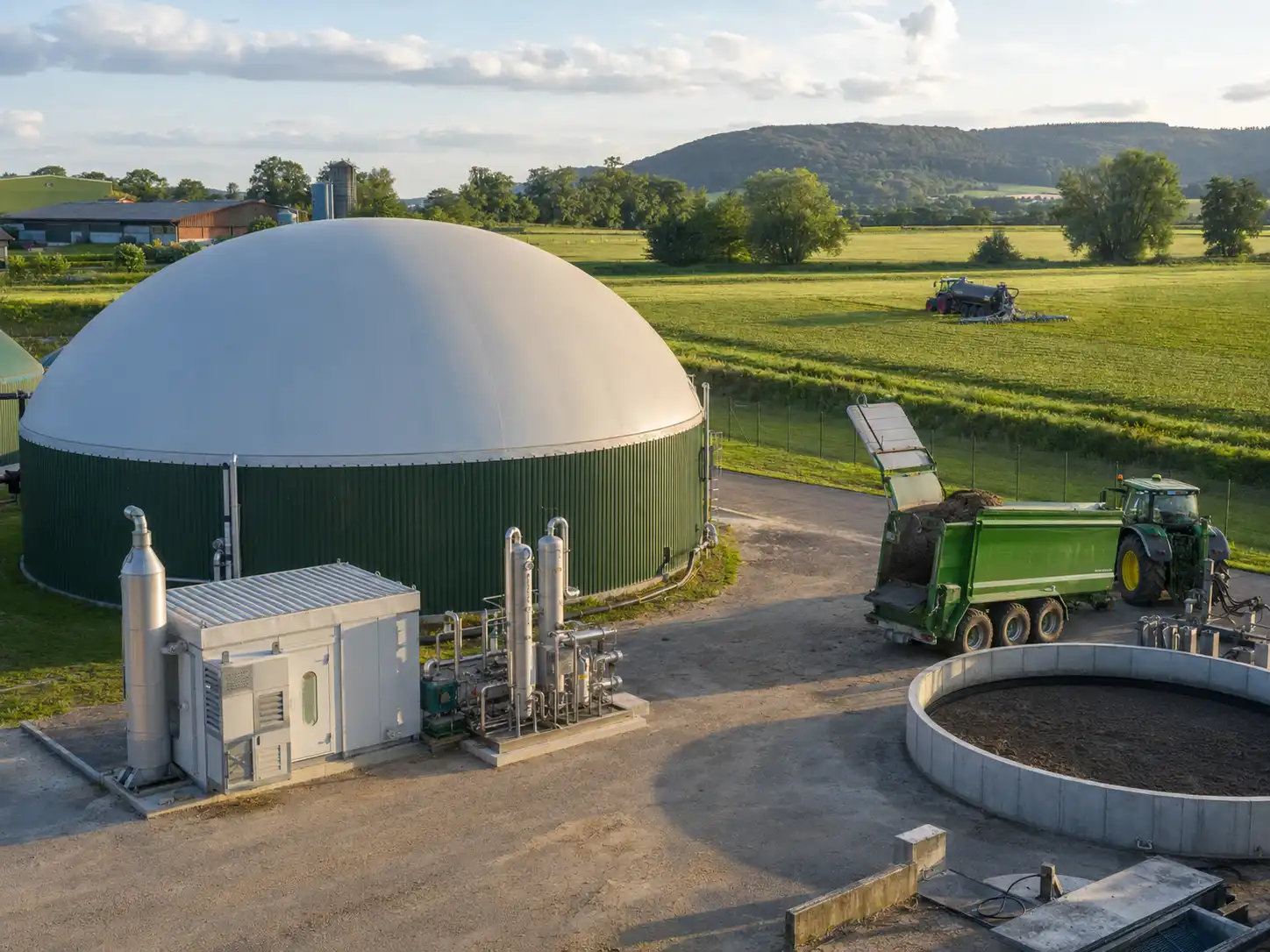
One of the most important components in this process is the biogas balloon. Installed between the anaerobic digester and the gas utilization equipment, it provides safe gas storage, stable pressure and a reliable buffer between fluctuating biogas production and changing energy demand.

Why Biogas Storage Is Essential in Manure Treatment Projects
Biogas production is rarely constant. It changes according to feedstock characteristics, feeding frequency, digester temperature, organic loading rate and microbial activity.
Gas consumption also fluctuates. A CHP generator, boiler, flare or biogas upgrading unit may not consume gas at the same rate at which the digester produces it.
Without sufficient storage capacity, this imbalance can cause:
- Frequent pressure fluctuations
- Unstable operation of downstream equipment
- Unnecessary flaring of valuable biogas
- Reduced energy utilization efficiency
- Increased safety risks
- Interruptions to the anaerobic digestion process
A double membrane gas holder solves this problem by temporarily storing excess biogas and releasing it when downstream equipment requires additional gas.
In this way, the gas holder acts as the balancing centre of the entire manure-to-energy system.
How a Double Membrane Gas Holder Works
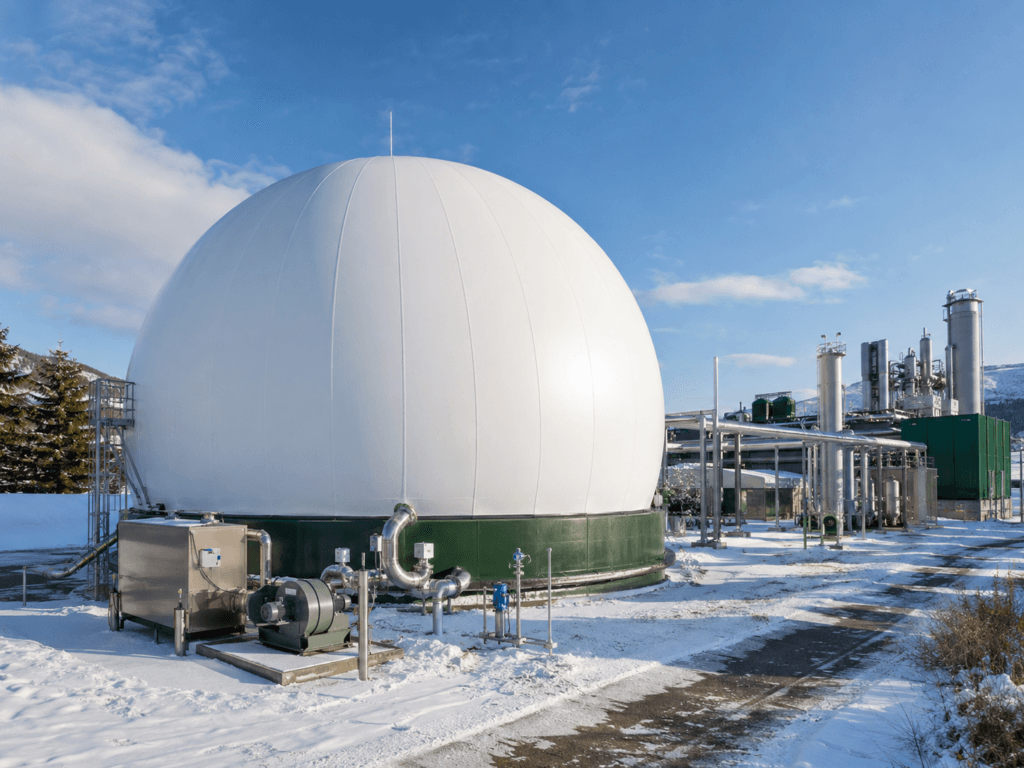
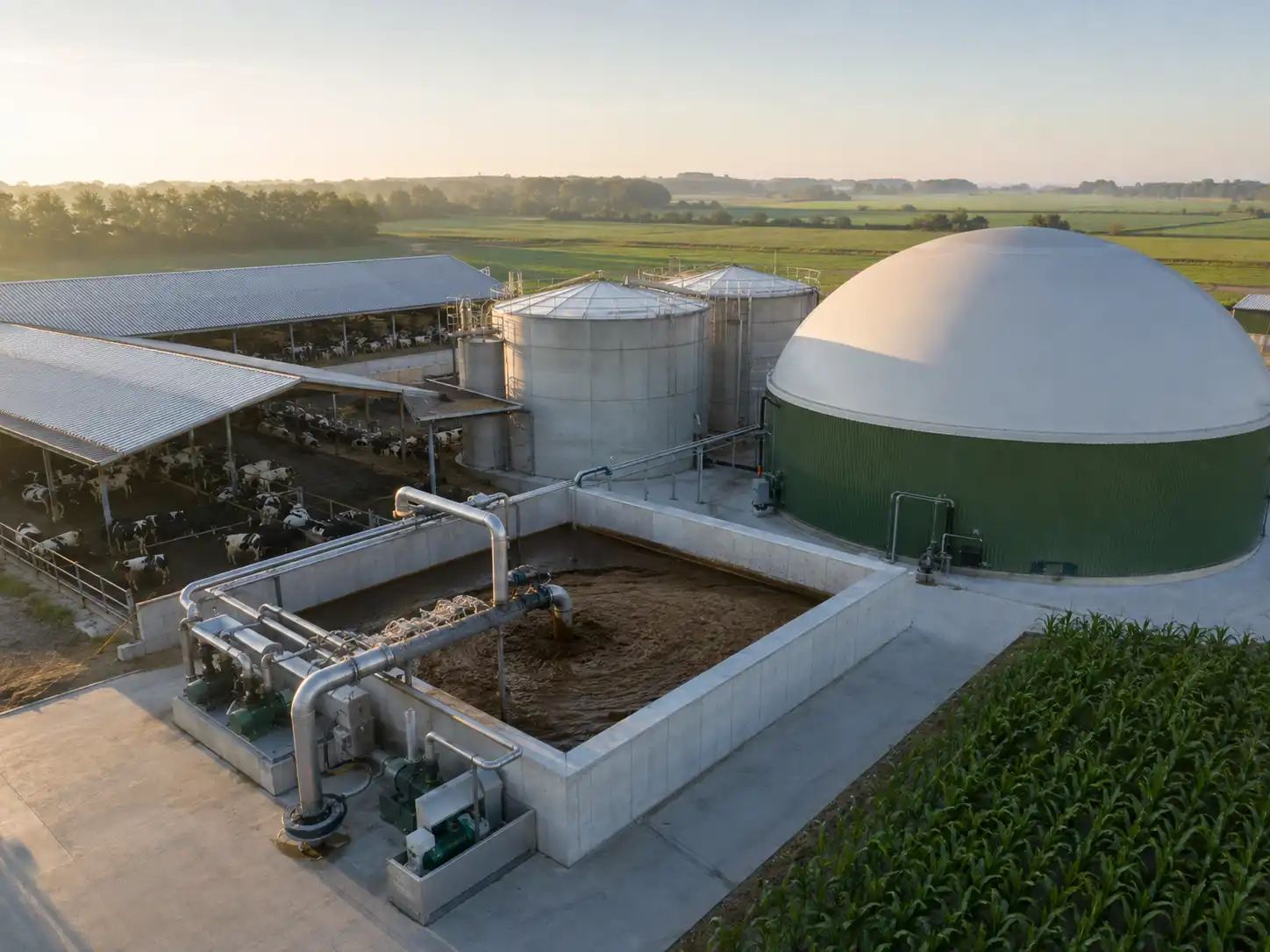
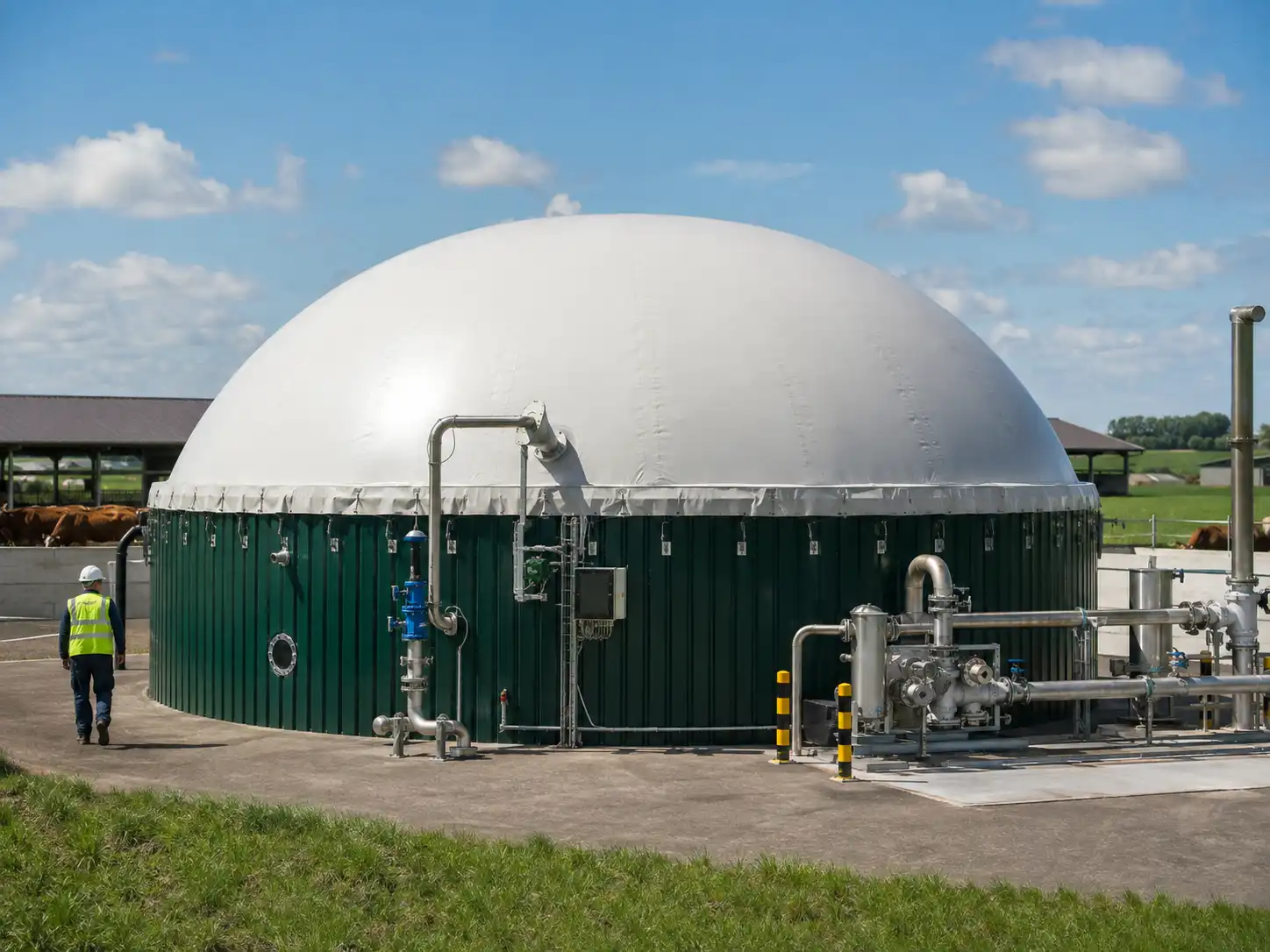
A typical double membrane gas holder consists of an inner membrane, an outer membrane and a bottom membrane.
The inner membrane contains the biogas. Its volume rises and falls according to the amount of gas stored inside the system.
The outer membrane is continuously supported by an air blower. It maintains the shape of the structure, protects the inner membrane from wind, rain, ultraviolet radiation and snow, and helps provide a stable gas outlet pressure.
The bottom membrane seals the gas storage area from the concrete foundation.
The system can also include:
- Explosion-proof air blowers
- Pressure transmitters
- Level or distance transmitters
- Control cabinets
- Safety relief devices
- Water-seal protection devices
- Gas leakage detectors
- Condensate drainage systems
- Emergency venting equipment
When properly designed, these components allow the gas holder to operate automatically and coordinate with the digester, CHP unit, flare and gas treatment system.
Four Benefits of Double Membrane Gas Holders in Livestock Manure Projects
1. Stable Gas Pressure
CHP generators, boilers and biogas upgrading systems require a relatively stable gas supply.
The air-supported outer membrane helps maintain a consistent operating pressure as the inner membrane expands and contracts. This pressure stabilization reduces sudden changes in gas flow and supports reliable downstream operation.
Stable gas pressure can help:
- Reduce generator shutdowns
- Improve combustion stability
- Protect gas purification equipment
- Maintain continuous heat and power production
- Extend the service life of connected equipment
2. Improved Biogas Utilization
Manure continues producing biogas even when energy demand is temporarily low. Without adequate storage, excess gas may need to be sent to the flare.
A correctly sized biogas holder stores this surplus and supplies it later when demand increases.
This allows livestock farms and regional treatment plants to recover more usable energy from the same amount of manure, improving the overall economics of the project.
3. Enhanced Operational Safety
Biogas contains methane and may also contain hydrogen sulfide, carbon dioxide and water vapour. It must therefore be stored and controlled using equipment designed for the actual operating conditions.
A properly engineered double membrane gas holder incorporates multiple protection measures, including pressure monitoring, overpressure relief, gas-level measurement and emergency control.
The gas holder capacity, membrane specification, air-blower capacity and safety-device discharge capacity must be selected according to the project’s maximum gas production and consumption rates—not simply according to nominal storage volume.
4. Resistance to Corrosion and Outdoor Conditions
Traditional steel gas storage structures may require regular corrosion protection, particularly when exposed to moisture and hydrogen sulfide.
Modern double membrane gas holders use high-strength coated membrane materials selected for:
- Gas tightness
- Tensile strength
- UV resistance
- Weather resistance
- Flame retardancy
- Resistance to hydrogen sulfide and moisture
- Long-term outdoor operation
This makes them suitable for livestock farms, agricultural biogas plants, wastewater treatment facilities and organic-waste digestion projects.
How to Select a Double Membrane Gas Holder
Choosing a gas holder based only on storage volume can lead to operational problems. A reliable design must consider the complete process.
Required Storage Capacity
The required volume depends on daily biogas production, hourly production fluctuations, gas consumption patterns and the operating schedule of downstream equipment.
The largest gas holder is not automatically the best choice. An oversized unit increases investment, while an undersized unit may cause frequent overfilling and unnecessary flaring.
Maximum Biogas Flow Rate
The maximum inlet and outlet flow rates determine the required pipe diameter, valves, condensate drainage equipment and pressure-protection capacity.
Two gas holders with the same nominal volume may require completely different safety configurations if their maximum gas flow rates are different.
Operating Pressure
The required pressure should be determined by the resistance of downstream pipelines and equipment.
The gas holder must maintain sufficient pressure for reliable gas delivery while remaining within the safe operating range of the membrane system.
Conclusion
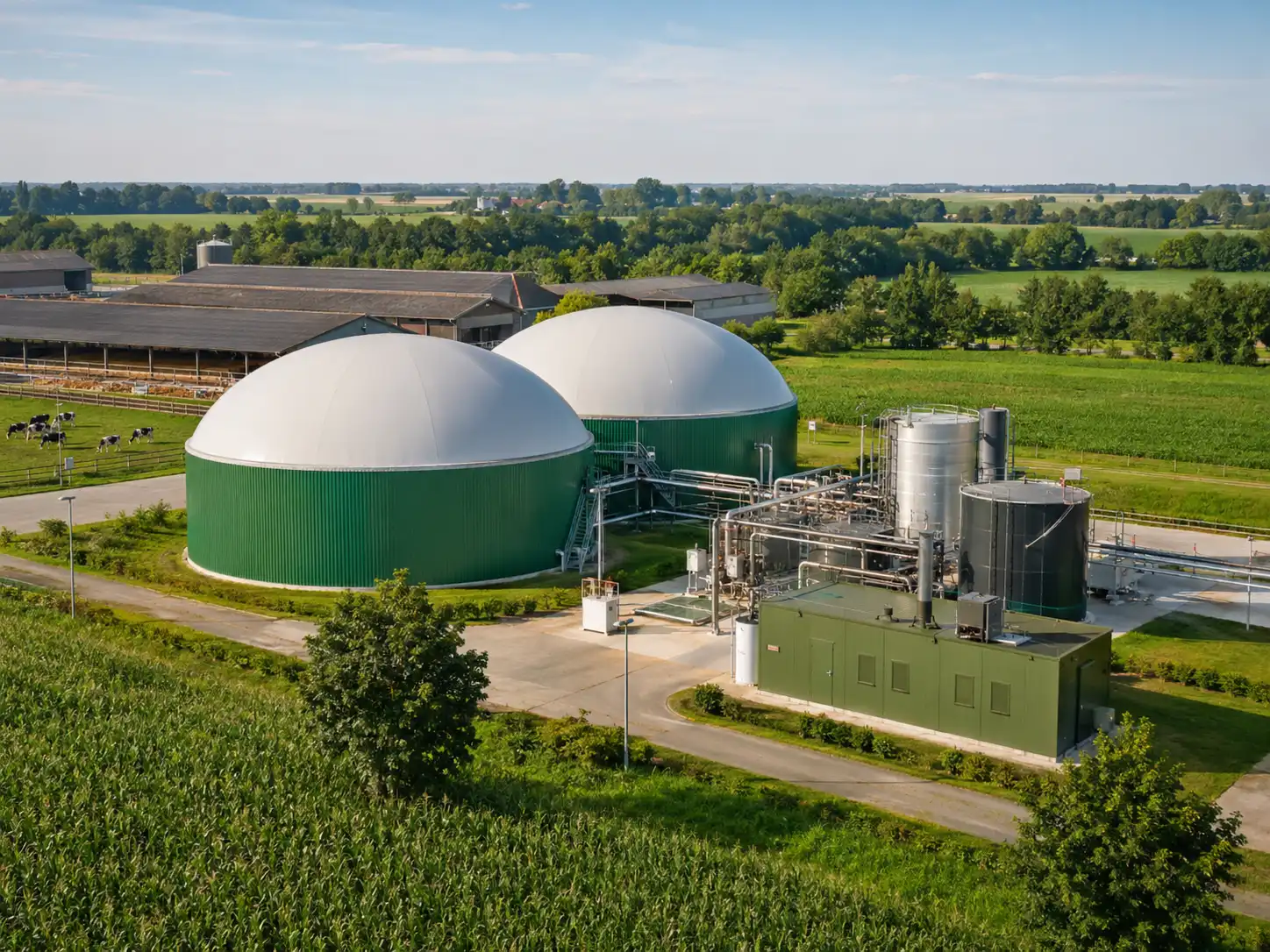
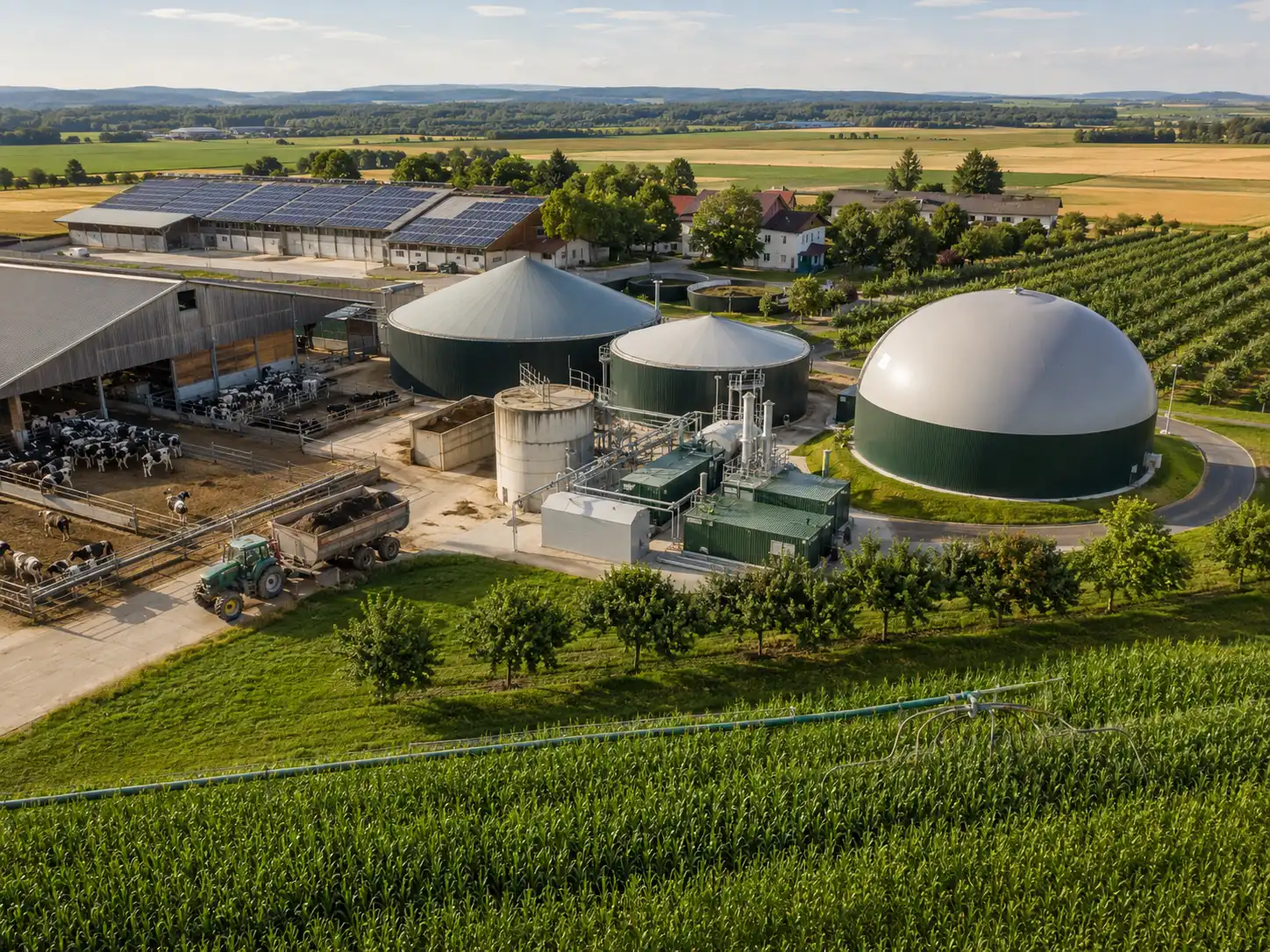
Livestock manure should not be treated merely as waste. It is also a valuable resource with significant potential for renewable energy production and agricultural reuse. Through anaerobic digestion, biogas storage, energy utilization, and the land application of solid and liquid digestate, a complete circular system can be established—from livestock farming and renewable energy production to sustainable crop cultivation.
Only through the integrated design of anaerobic digesters, double membrane gas holders, biogas purification equipment, CHP generators, biogas flares, and organic fertilizer treatment systems can livestock manure be effectively reduced, treated safely, recovered as a resource, and converted into renewable energy. This integrated approach creates long-term environmental and economic value for livestock farming enterprises.
Looking for a Double Membrane Gas Holder or Biogas Engineering Solution? Contact Haiyue
If you are planning a livestock manure treatment, anaerobic digestion, biogas power generation, biogas purification, or circular agriculture project, Qingdao Haiyue can provide professional double membrane gas holder selection and customized biogas engineering solutions based on your actual operating conditions.
.
RELATED BLOG